Is America Under Attack From Boston Marathon Bombing To Small Texas Town Fertilizer Plant Explosion And If So By Who?

From the Boston Marathon Massacre to the explosion at a fertilizer plant that rocked a small Texas town near Waco Wednesday night.  It was once said  ”You never want a serious crisis to go to waste”Rahm Emanuel:  You have to ask yourself are we living in the End of days as Jesus Christ spoke about before his return and if so what else should we also expect to happen?   And this gospel [of the Kingdom] must first be published among all nations. “But when they shall lead you, and deliver you up, take no thought beforehand what ye shall speak, neither do ye premeditate: but whatsoever shall be given you in that hour, that speak ye: for it is not ye that  speak, but the Holy Ghost. “Now the brother shall betray the brother to death, and the father the son; and children shall rise up against their parents, and shall cause them to be put to death. “And ye shall be hated of all men for my name’s sake: but he that shall endure unto the end, the same shall be saved.” (Mark 13:10-13)

Shortly before His crucifixion and resurrection, Jesus Christ delivered a major prophecy of end-time events, recorded in Matthew 24, Mark 13 and Luke 21. He was asked by His disciples: “When will these things be? And what will be the sign of your coming, and of the end of the age?” (Matthew 24:3 ). Jesus responded with a description of conditions and events that would lead up to His second coming. Moreover, He said that when these signs became evident, His return would occur within one generation!

I believe that many of these tragic events are happening are a build up to a 3 World War.  Predicted by the Illuminati s own Albert Pike

This Section Copied from:http://tobefree.com

July 10, 2010

1871 — Satanist and Freemason commander, Albert Pike predicted World War I – III. “The Third World War is to be played out by…”

From: iamthewitness, The Synagogue of Satan 1821-1875.

1871

Albert  Pike
Albert Pike

An American General named, Albert Pike, who had been enticed into the, “Illuminati,” by Guiseppe Mazzini, completes his military blueprint for three world wars and various revolutions throughout the world, culminating into moving this great conspiracy into its final stage. These details are as follows:

  1. The First World War is to be fought for the purpose of destroying the Tsar in Russia, as promised by Nathan Mayer Rothschild in 1815. The Tsar is to be replaced with communism which is to be used to attack religions, predominantly Christianity. The differences between the British and German empires are to be used to foment this war.
  2. The Second World War is to be used to foment the controversy between fascism and political Zionism with the oppression of Jews in Germany a lynchpin in bringing hatred against the German people. This is designed to destroy fascism (which the Rothschilds’ created) and increase the power of political Zionism. This war is also designed to increase the power of communism to the level that it equalled that of united Christendom.
  3. The Third World War is to be played out by stirring up hatred of the Muslim world for the purposes of playing the Islamic world and the political Zionists off against one another. Whilst this is going on, the remaining nations would be forced to fight themselves into a state of mental, physical, spiritual and economic exhaustion.

On August 15th of this year, Albert Pike writes a letter (now catalogued in the British Museum) to Guiseppe Mazzini in which he states the following,

“We shall unleash the nihilists and the atheists and we shall provoke a great social cataclysm which in all its horror will show clearly to all nations the effect of absolute atheism; the origins of savagery and of most bloody turmoil.

Then everywhere, the people will be forced to defend themselves against the world minority of the world revolutionaries and will exterminate those destroyers of civilization and the multitudes disillusioned with Christianity whose spirits will be from that moment without direction and leadership and anxious for an ideal, but without knowledge where to send its adoration, will receive the true light through the universal manifestation of the pure doctrine of Lucifer brought finally out into public view.

A manifestation which will result from a general reactionary movement which will follow the destruction of Christianity and Atheism; both conquered and exterminated at the same time.”

Pike, who had been elected as Sovereign Grand Commander of the Scottish Rite of Freemasonry’s Southern Jurisdiction in 1859, was the most powerful Freemason in America. He would retain that post for thirty-two years until his death in 1891. He also published a book on the subject in 1872 entitled, “Morals and Dogma of the Ancient and Accepted Scottish Rite of Freemasonry,” in which he candidly states the following,

“The true name of Satan, the Kabbalists say, is that of Yahweh reversed; for Satan is not a black god, but the negation of God…For the Initiates, this is not a Person, but a Force, created for good, but which may serve for evil. It is the instrument of Liberty and Free Will…

LUCIFER, the Light-bearer! Strange and mysterious name to give to the Spirit of Darkness! Lucifer, the Son of the Morning! Is it he who bears the Light, and with its splendors intolerable blinds feeble, sensual or selfish Souls? Doubt it not!”

Interestingly, in the same book, Pike emphasizes that Freemasonry is a religion based on the occult Jewish philosophy found in the Kabbalah.

This section Copied from: http://www.antipasministries.com/

“Think of the press as a great keyboard on which the government can play …”  “If you tell a lie big  enough and keep repeating it, people will eventually come to believe it …”“The truth is the mortal enemy of the lie, and thus by extension, truth is the greatest enemy of the State …”                                                     Dr. Joseph Goebbles.   Minister for Propaganda of Hitler’s Third Reich

The Truth: It’s a shell game
to the elite press.

The main function of today’s elite press is to present a lie as the truth; to depict that which is false as factual!  AND THAT IS CERTAINLY WHAT THE ELITE MEDIA IS DOING TODAY REGARDING ITS REPORTING ON THE ECONOMIC CRISIS THAT HAS TAKEN HOLD OF THE COUNTRY AND THE WORLD.

CELENTE: PREDICTS WAR

And it’s not just Marshall who sees bloodshed on the horizon: Gerald  Celente, the head of the Trends Research Institute, the major trend-forecasting agency in the world has recently released a Trend Alert, reporting that,     “The biggest financial bubble in history is being inflated in plain sight,”  and that –

THIS IS THE MOTHER OF ALL BUBBLES, and when it explodes […] it     will signal the end to the boom/bust cycle that has characterized economic  activity throughout the developed world. This is going to be much bigger than the … Real Estate [residential and commercial] bubbles which [recently] hit speculators, investors and financiers … When the ‘Bailout Bubble’ explodes,  the system goes with it.”

Celente continues:

“The phantom dollars, printed out of thin air, backed by nothing … and     producing next to nothing … defines the ‘Bailout Bubble’. Just as with the     other bubbles, so too will this one burst. But unlike [the residential and     commercial] real estate bubbles, when the “Bailout Bubble” pops,     neither the President nor the Federal Reserve will have the fiscal fixes or     monetary policies available to inflate another.”


Celente  then goes on to say something truly remarkable:

GIVEN THE PATTERN OF GOVERNMENTS TO PARLAY EGREGIOUS FAILURES INTO     MEGA-FAILURES, THE CLASSIC TREND THEY FOLLOW, WHEN ALL ELSE FAILS, IS TO     TAKE THEIR NATION TO WAR, and that, while we cannot pinpoint precisely   when the ‘Bailout Bubble’ will burst, we are certain it will. When it [i.e.,  the bailout bubble] … breaks, IT SHOULD BE UNDERSTOOD THAT A MAJOR WAR  WILL FOLLOW.”

Interestingly, the “bailout bubble” that Celente was referring to     amounted at the time to $12.8 trillion. As of July, estimates by Bloomberg     put this bubble at nearly double the previous estimate.

I urge you all to take advantage of the time you have left!

[Please see our  article,

He Is Near, at the Door:  Here Comes Antichrist.”]

Matthew 24:34 ). Could this be that generation?

In Matthew 24:22And except those days should be shortened, there should no flesh be saved: but for the elect’s sake those days shall be shortened.
See All…, describing world conditions prior to His second coming, Jesus said that “if that time of troubles were not cut short, no living thing could survive; but for the sake of God’s chosen it will be cut short” (Revised English Bible).

False Flag Operation 04/15/13 Bombing Boston Marathon Massacre the New American Operation Gladio.

Friends yes its breaking news US Government Agents caught red-handed planting the bombs on site in black back packs with men wearing Navy Neal emblems and gear.   As you will see from the photo’s bellow all the evidence is damning.  Its not looking good for the United States special forces.  The question is who will be the patsy this time the guys caught on videos and in the photo or do they have some drugged out mind controlled zombie on stand by to call a Right Wing Christian extremist.

  • There’s an old saying if it looks like a duck, Quacks Like a duck, walks like a duck it’s probably a duck.  Yes friends what we have uncovered in the hours after the Boston Marathon Tax Day, Patriots Day Bombing is looking more like a false flag event,  The question is who was this orchestrated by and why?  Who stands to gain from others pain and sufferings.  My thoughts go back to the Illuminati and the secret Societies that are trying to build a New World Order have the means as in connections and motives to carry out such a tragic event.

    The question you have to ask yourself is why and for what reason.  It was once said  ”You never want a serious crisis to go to waste”Rahm Emanuel:  This gives the Government the reason to do all sorts of things to control people’s lives like putting more troops on the streets or shutting down the internet and putting controls of what you have the ability to search for or what you can say on your blog.

    What I see happening is leading to more invasive TSA presence at sporting events and other gatherings and the Illuminati or NWO flunkies are going to make things so bad that people beg the government to solve the problem of this so-called terrorism.  Patriot groups are being accused from the Mainstream Media and the DOD.  What we are really talking  about is Problem > Reaction > Solution? Also known as The Hegelian Dialectic, or Diocletian’s Theory, it was seen to perfection by the Blair Government in the UK (1997-2007) spin machine it is a basic psychological method, developed in the early 20th Century, of manipulating an agenda, whether it be an individual salesman making a sale, a Government wanting to push through potentially unpopular legislation or a Corporation trying to increase its profit margin.

    Simply Put:

    Problem – Manipulate “customer” reaction by creating a perceived problem, perhaps by leaking stories to the press e.g.: Iraq WMD, Terrorist threat, Global Warming

    Reaction – Your “customer” obviously is concerned by this apparent turn of events and demands help and protection

    Solution – Eh Voila, you come up with the solution to save the day, the same “solution” that you would never have been able to sell before making the customer worried e.g.: 5 years of Iraq war; an endless war on a noun (terror); and people for the first time being willing to pay more taxes and cut back on their consumption to “save the world” all under a false pretext.

    The question is does the end ever justify the means? NO!  The end game is that the New World Order/Illuminati/Zionist cabal claims that the earth is over-populated and that the population must be reduced by whatever means necessary. The bottom line is that the elitists want the whole world for themselves.  They want to eliminate the rest of us who they refer to as “useless eaters.”  They want to return to what they call a “Post-Industrial Society” the type of society that existed before the Industrial Revolution.  According to them, the middle class must be eliminated to leave only two classes:  the Rich – – – and the slaves.  The American Middle class is standing in the way of this globalist plan.

    No kidding.  How Bizarre!  Is this a sign that the Illuminati are behind this bombing?   Maybe even behind Newtown Massacre since the last mile was dedicated to Newton victims?  The last mile ending at 666 Boylston St. Thats really wild..  -Mort

PHOTO: An explosion at fertilizer plant rocked a small Texas town near Waco Wednesday night - causing several injuries and destroying homes and vehicles, authorities said.

An explosion at fertilizer plant rocked a small Texas town near Waco Wednesday night – causing several injuries and destroying homes and vehicles, authorities said.  (ABC)

By  (@leezeltanglao)  and JOHN SANTUCCI

April 17, 2013
 A fiery explosion at a Texas fertilizer plant in a small town 19 miles north of Waco has injured 200 people and destroyed dozens of homes and businesses, an emergency official said.

Of the 200 people injured near the West, Texas, plant, 40 were injured critically, Texas Department of Public Safety spokesman Gail Scarborough said.

It was unclear whether or not there were deaths.

This was a breaking news story. Please CLICK HERE for more updates.

Get Prepared Doomsday is just around the corner.


Prepare for a financial Doomsday

Copied and starred from http://homesteadsurvival.blogspot.com/2012/09/prepare-for-financial-doomsday.html

Guest Post by Andy from Financial Gooru

Prepare for a financial Doomsday

Many of us are preparing for the end of times; because as we all know it it is a matter of when not if. While many of us out there are preparing for the complete collapse of the world as we know it not many of us are preparing for a Financial Doomsday which will probably happen sooner than nature going haywire on us. So how exactly do we prepare for a financial Doomsday/ Economic collapse.  Through intensive research I have found way that I think will help anyone survive and Economic/ Financial Doomsday.

Save Money
This one is a bit of a obvious one but I have to put it out there. A shockingly high number of American families are operating without any kind of financial cushion whatsoever.
-According to a Harris Interactive survey taken in 2010, 77 percent of all Americans are living paycheck to paycheck.
-According to one recent survey, one out of every three Americans would not be able to make a mortgage or rent payment next month if they suddenly lost their current job.
This is one reason why so many Americans have lost their homes and why so many Americans have fallen below the poverty level in recent years.  They simply had no cushion.
Last year, 2.6 million more Americans dropped into poverty.  That was the largest increase that we have seen since the U.S. government began keeping statistics on this back in 1959.
Don’t let this happen to you.  At a minimum, everyone out there should have a cushion that will cover at least 6 months worth of expenses.  Preferably, you should have a cushion that will last you at least a year or longer. I know that sounds like a lot but trust me you will love having this around in case something does happen to you and your family.
The easiest way I found to do this is I used to buy a cup of coffee from Quick Trip every morning, it would cost me with tax 2.02 (it was their medium size I think if I remember correctly.). Then one day I really got to thinking how much could I save if I stopped drinking coffee well at least buying it from QT every morning. So I did simple math 2.02×7 is $14.14 a week or $56.56 a month about $678.72 a year! And that was just a cup of coffee I of course cut out eating out, junk food for the most part and I am now saving well over $200 a month and putting all of that into savings. That is just one example of how I did it. I am sure there are many ways out there of saving money I have probably not even thought up of yet and I am talking about small things not drastic. Not to mention the cut of junk food has made me happier and healthier.
Investments
 Now I want to be clear with this. This is not your typical investment that I am about to talk about. But rather one more suited towards the fall of an economy and essentially the dollar. The most obvious investment you can make is to buy gold and silver. I think every person in this country is doing that at this point. While that will hold value and its all and good, you can not eat gold and silver. At one point people will want food rather than gold. So a gold and silver investment while good should not be the only investment.
Once the economy fails and everyone is running around trying to figure out what to do and items and resources become scares, everything will start becoming more localized and we will probably move back to a barter system. With that said it will be good to prepare for a barter type of system just in case it ends of that way and even if it doesn’t it will not harm you in any way. Here is what I think you will need in a barter type of system.
1. Water, The single most important item any one person can have. Drinkable water is important to life. While I would stock up a lot on this you can also invest in rain catching gear, water purifying system and other things to make undrinkable water drinkable.
2. Salt, stock up on this and start now. This one little thing that people take for granted everyday will be essential to your survival and a good thing to have in a barter system. Salt is one of the most important thing a person can have in their stock pile period. It is essential for the human body, it makes food yummy, and it can preserve food as well.
3. Spices, you think they are expensive now wait until the economy fails and governments go bankrupt and so do major companies. This one comity that people take for granted will be super rare and expensive. However, most spices and herbs can be grown almost anywhere with a little bit of knowledge.  A good website I found about some spices you can grow are http://ideas.thenest.com/dinner-recipes/cooking-advice/slideshows/easy-spices-to-grow.aspx?page=5  and http://www.tropicalpermaculture.com/growing-herbs.html these are two very good sites to get you started.
4. Live stock, food is one of those thing you have to have. While you can hunt if you do not have live stock which is a good way to get meat and other foods live stock is more beneficial. It is there when you need it you don’t have to go out and find it hopefully, you can trade it for other animals goods or services, and depending on the animal it will have many uses.
5. Other currency, while it is good to have food water etc it is also a good idea to have some form of other currency available in case you can some how assuming things are not that bad go to another country or that their currency is not completely useless. This is something I would keep around, because I do not like to assume anything like all currency will be useless and you will be trapped in this country. You just never know what life will throw at you and where you might find yourself. Therefore, I think that having some other currency like Euros, Yen, and the Australian dollar to name a few might be useful.
6. Land, I believe that land is one of those things that over time will increase in value even more so than gold. Because scientist have found a way to make artificial gold believe it or not, but they have yet to find a way without lasing our water supply it will grow in value tremendously. Not to mention land is very useful to have because you can grow food on it have life stock and the uses for land are almost limitless. Not to mention if the land has  a natural aquifer.
Like I said not your normal investment portfolio. I could spend so much more time on this but these are the 6 things I think will help you if an economy collapses.
Pay off any debt
Now this one may be a bit tricky to do since many people are having trouble meeting ends meet. But by all means try to pay off any and all debts you may have. I am going to take a guess that banks will want money owed to them if the economy starts failing to keep themselves afloat. Just because the economy fails doesn’t mean our money will be worthless. The great depression is a perfect example of that. Money was not all that worthless still had value just not as much as it does now.  This one again may be hard but I know from personal experience but it has to be done. Many things can happen if the American economy can fail don’t be caught off guard pay off any dept you may have.  I will have a completely separate blog post about this coming up soon. As I have said I was in that boat I have searched for solutions and I have found it through trial and error. I have given the advice to my friends and it worked great for them. So I will dedicate a whole blog post just to that.
Learn a Skill
Learning a skill is good even if the economy is still going strong. But a  carpenter, welder, handyman can be worth their own weight in gold. Knowing how to build and work with your hands will be skills that if the economy goes you can use to barter with. It can be almost any skill just learn one or a trade and master it. I would say master one than have 1000 that you barely know what you are doing.
These are some of things I would recommend. There is so much when it comes to this that I could make this blog post endless, yet I do have to end it at some point. Just remember what can go wrong will go wrong. Do not assume anything prepare for everything. It cant hurt to be ready it can only hurt not to be ready. As we have seen time and time again it is a matter of when not if. If you have any ideas or comments please feel free to post them and let me know how I did or if I missed something important.

http://financialgooru.blogspot.com/


Truth about Austerity Measures and Bailouts It’s Just Money for The Illuminati Family’s!

AntiNewWorldOrderParty.com

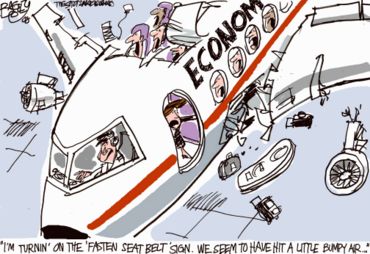
Austerity Measures and Bailouts are just payments to the Illuminati Family’s by way or proxy!  First the Banksters get Nations in dept by loans and bailouts that can not be paid back, like what is happening in America.  Second The Nation makes governmental cuts like what is happening in EUROPE  aka stealing pensions , cutting services like Parks, Police Teachers Firemen ect ect! Then the Government sells off Parks Government owned property, Roads Water ways Parks ect ect to the Illuminati Bankster Familys AKA the MOBSTERS!

This is all part of the (The Hegelian Dialectic) aka The Problem Reaction Solution method!  .. the Illuminati family’s or the ruling elite create a problem, anticipating in advance the reaction that the population will have to the problem and then have the prepared Solution!  Example an Global Economic Melt down.  The after the people react and demand a solution to the created problems that was the  desired agenda of the ruling elite.  Then and only then the Pre prepared agenda of the Global Elite Banksters  presented as the solution such as a one world Governmental Monetary system or Global Governmental system to fix the problem. 

The bad part about this conspiracy is that along with the reaction to the problem the population becomes violent, in protesting the Austerity Measures implemented by the Governments!  And once again (The Hegelian Dialectic) comes into place with  FEMA Camps AKA Concentration Camps for the protesters dissidents and homeless people effected by the Illuminati s Global Agenda 

In economicsausterity is a policy of deficit-cutting, lower spending, and a reduction in the amount of benefits and public servicesprovided.[1] Austerity policies are often used by governments to reduce their deficit spending[2] while sometimes coupled with increases in taxes to pay back creditors to reduce debt.[3] “Austerity” was named the word of the year by Merriam-Webster in 2010.[4]

The Expansionary fiscal contraction hypothesis is the economic theory that explores whether government austerity can result in economic expansion. This hypothesis indicates that expansion from austerity is very limited and occurs only during periods when consumption is not constrained.

Contents

[hide]

[edit]Reasons for undertaking austerity measures

Austerity measures are typically taken if there is a threat that a government cannot honor its debt liabilities. Such a situation may arise if a government has borrowed in foreign currencies that they have no right to issue or they have been legally forbidden from issuing their own currency. In such a situation, banks may lose trust in a government’s ability and/or willingness to pay and either refuse to roll over existing debts or demand extremely high interest rates. In such situations, inter-governmental institutions such as the International Monetary Fund (IMF) may demand austerity measures in exchange for functioning as a lender of last resort. When the IMF requires such a policy, the terms are known as ‘IMF conditionalities‘.

[edit]Typical effects

Development projects, welfare, and other social spending are common programs that are targeted for cuts: Taxes, port and airport fees, train and bus fares are common sources of increased user fees.

In many cases, austerity measures have been associated with protest movements claiming significant decline in standard of living. A case in point is the nation of Greece. The financial crisis—particularly the austerity package put forth by the EU and the IMF— was met with great anger by the Greek public, leading to riots and social unrest. On 27 June 2011, trade union organizations commenced a forty-eight hour labor strike in advance of a parliamentary vote on the austerity package, the first such strike since 1974. Massive demonstrations were organized throughout Greece, intended to pressure parliament members into voting against the package. The second set of austerity measures was approved on 29 June 2011, with 155 out of 300 members of parliament voting in favor. However, one United Nations official warned that the second package of austerity measures in Greece could pose a violation of human rights.[5]

[edit]Controversy

Austerity programs can be controversial. In the Overseas Development Institute briefing paper “The IMF and the Third World” the ODI addresses five major complaints against the IMF’s austerity ‘conditionalities’. These complaints include these measures being “anti-developmental”, “self-defeating”, and “they tend to have an adverse impact on the poorest segments of the population”. In many situations, austerity programs are implemented by countries that were previously under dictatorial regimes, leading to criticism that the citizens are forced to repay the debts of their oppressors.[6][7][8]

Economist Richard D. Wolff has stated that instead of cutting government programs and raising taxes, austerity should be attained by collecting (taxes) from non-profit multinational corporations, churches, and private tax-exempt institutions such as universities, which currently pay no taxes at all.[9]

In 2009, 2010, and 2011, workers and students in Greece and other European countries demonstrated against cuts to pensions, public services and education spending as a result of government austerity measures.[10][11] Following the announcement of plans to introduce austerity measures in Greece, massive demonstrations were witnessed throughout the country, aimed at pressing parliamentarians to vote against the austerity package. In Athens alone 19 arrests were made while 46 civilians and 38 policemen had been injured by June 29, 2011. The third round austerity has been approved by the Greece parliament on February 12, 2012 and has met strong opposition especially in the cities of Athens and Thessaloniki where the police have clashed with demonstrators.

Opponents argue that austerity measures tend to depress economic growth, which ultimately causes governments to lose more money in tax revenues. In countries with already anemic economic growth, austerity can engender deflation which inflates existing debt. This can also cause the country to fall into a liquidity trap, causing credit markets to freeze up and unemployment to increase. Opponents point to cases in Ireland and Spain in which austerity measures instituted in response to financial crises in 2009 proved ineffective in combating public debt, and placing those countries at risk of defaulting in late 2010.[12]

[edit]The “Age of Austerity”

The term “Age of austerity” was popularized by British Conservative leader David Cameron in his keynote speech to the Conservative party forum in Cheltenham on April 26, 2009, when he committed to put an end to what he called years of excessive government spending.[13] [14]

[edit]Word of the year

Merriam-Webster’s Dictionary named the word “austerity” as its “Word of the Year” for 2010 because of the number of web searches this word generated that year. According to the president and publisher of the dictionary, “austerity had more than 250,000 searches on the dictionary’s free online [website] tool” and the spike in searches “came with more coverage of the debt crisis”.[15]

[edit]Examples of austerity

This section is in a list format that may be better presented using prose. You can help by converting this section to prose, if appropriateEditing help is available. (June 2011)

Anti-austerity protests, chiefly taking the form of massive street protests by those affected by them and some of them also involving a greater or lesser degree of militancy, have happened regularly across various countries, especially on the European continent, since the onset of the present-day worldwide financial crisis. The phenomena are, collectively, decidedly separate, conceptually, from the austerity measures themselves, even though the enactment of the latter is a prerequisite for the former. This is because they are of the sizes they are; that they cut across age groups (e.g., both students and older workers) and other demographics; that they can incorporate many different types of actions in many different segments of a given country’s economy including education funding, infrastructure funding, manufacturing, aviation, social welfare, and many many others; and that the phenomenon of austerity, when explained by itself, is inadequate to properly encompass the phenomenon of widespread opposition to it, and that opposition’s nuances and fluctuations.

Anti-austerity actions are varied, ongoing, and can be either sporadic and loosely-organised or longer-term and tightly-organised. Theycontinue as of the present day. Recent upheavals in Tunisia and in Egypt in 2011 were originally largely anti-austerity and anti-unemployment before turning into wider social revolutions.

Most recently, the global and still-spreading Occupy movement has arguably been the most noticeable physical enactment of anti-austerity and populist sentiment.

Contents

[hide]

[edit]Background

Austerity is mainly noticed by a country when its aspects (usually known as ‘cuts’) are implemented unilaterally and forcibly (a “hatchet job“) rather than through a more careful strategy of creeping normalcy wherein such cuts are made to seem reasonable, or at least tolerable. Austerity is usually only referred to by that name when it is part of a sweeping package or packages of reforms that have the openly-admitted effect of great or even complete overhaul of major aspects of a society’s socioeconomic core facilities, programs and/or services. Because of this nature, austerity programs in general often are virulently opposed by the populations experiencing them, as they tend to have an impact on the poorest segments of the population. Those who are pro-austerity (who usually refer to the process as “deficit reduction”) usually counter that these poorest segments of the population would also suffer the most should a debt crisisoccur[citation needed], an argument rejected by most anti-austerity individuals.

Prior to the 2010 European sovereign debt crisis, in many situations, austerity programs were implemented by countries that were previously under dictatorial regimes (e.g., Portugal, Greece, Spain), leading to criticism that the citizens are forced to repay the debts of their oppressors.[1][2][3] In Greece, for example, the current austerity measures are popularly viewed as a combination of leftover policies of the 1967-1974 military dictatorship in that country on the one hand, and the “betrayal” of socialist principles by the current parliamentary-majority Panhellenic Socialist Movement on the other hand, due to that party’s wholesale enactment of extremely severe austerity measures in the country, which most everyday Greeks conceive of as intensely right-wing in nature, at least when compared to the party’s officially-stated core beliefs.[citation needed]

In the present-day enactments of various “austerity budgets”, however, a prior history of dictatorship is not necessarily a precondition for the implementation of such a budget by a given government. Examples of countries implementing severe austerity measures without a history of what the world’s mainstream media would typically consider a ‘dictatorship’, include the United Kingdom and the Republic of Ireland, the latter of which witnessed its housing market completely (rather than partially as elsewhere) collapse, and the Republic eventually appealing for a massive bailout from the International Monetary Fund, “in exchange for” implementation of a very severe austerity programme. The austerity measures and the terms of the IMF bailout became major aspects of the 2008–2011 Irish financial crisis, and popular anger over these issues played a very major role in the loss of governmental power of Fianna Fáil to opposition parties in the 2011 Irish general election. The loss was so complete and so total for Fianna Fáil that many commentators remarked that the results were “historic”. Fine Gael and the Labour Party entered in to a coalition government with one another, and Fine Gael’s leaders have vowed to re-negotiate the terms of the IMF bailout so that austerity can be slowed or stopped and the Irish economy can be given a chance to grow again.[4] Sinn Féin, which for the first time also won a notable percentage in the election, has called for a nationwide referendum over whether the bailout agreement should be scrapped altogether, but this suggestion has been met with dismissal by officials.[5]

Austerity in most European countries, including Spain and Italy — where there have been massive anti-austerity protests, wildcat strikes, and union-organized industrial actions of various types at semi-regular intervals since late 2008, earning for the most part massive worldwide media attention — is by no means limited to what could be the ‘expected’ areas of the economy that might in theory experience direct penalties as a result of gross mismanagement, such as financial institutions. In fact, financial institutions rarely, if ever, truly receive such ‘punishment’ by a country’s government; austerity-like levies could perfectly well be imposed on them for causing, or helping to cause, the crisis that leads to the austerity measures in the first place, but typically are not. Instead, it is argued (chiefly by people engaging in anti-austerity protests, but also some economists as well) that rather than ‘punish’ the banks and others truly responsible for the crisis, the government is instead ‘punishing’ regular people for the ‘crimes’ of others, namely the ‘elite’ and/or greedy professional money-handlers engaging in market manipulation.

[edit]Examples

100,000 peaceful anti-austerity protesters in front of the parliament of Greece on 29 June 2011.

  • The May–July 2011 Greek protests, also known as the “Indignant Citizens Movement” or the “Greek indignados”, started demonstrating throughout Greece on 25 May 2011;[6] the movement’s largest demonstration was on 5 June, with 300,000 people gathering in front of the Greek Parliament,[7] while the organizers put the number to 500,000.[8] The protests lasted for over a month without any violent incidents, while on 29 June 2011, amid a violent police crackdown and accusations of police brutality by international media and Amnesty International,[9][10][11][12][13][14][15] the square was evacuated but demonstrations continued the next day despite the crackdown;[16][17] they officially ended on 7 August 2011,[18] but resumed in October.
  • The 2011 Spanish protests, whose participants are sometimes referred to as the “indignados“, are a series of ongoing anti-austerity demonstrations in Spain that rose to prominence beginning on 15 May 2011; thus, the movement is also sometimes referred to as the May 15 or M-15 movement as well. It is a collection of several different instances of continuous demonstrations countrywide, with a common origin in internet social networks and the Democracia Real Ya web presence, along with 200 other small associations.[19]
  • In late March 2011 the Portuguese Prime Minister resigned a few hours after the latest austerity bill he backed was rejected by the rest of government. The government called that particular austerity round unacceptable.[20] In his resignation speech, Jose Socrates expressed concern that an IMF bailout akin to Greece and Ireland would now be unavoidable.
  • In mid-March 2011 the British Medical Association held an emergency meeting at which it broadly decided to emphatically oppose pending legislation in the British Parliament, the Health and Social Care Bill, that would overhaul the functioning of the National Health Service. Dr Layla Jader, a public health physician, said: “The NHS needs evolution not revolution – these reforms are very threatening to the future of the NHS. If they go through, our children will look back and say how could you allow this to happen?” And Dr Barry Miller, an anaethetist from Bolton, added: “The potential to do phenomenal damage is profound. I haven’t seen any evidence these proposals will improve healthcare in the long-term.”[21] There have also been various grassroots groups of UK citizenry virulently opposing the pending new bill, including NHS Direct Action,[22] 38 Degrees,[23] and the trade union Unite.[24]
  • One of the United Kingdom‘s most severe austerity measures came into the force of law on 9 December 2010: spending for higher education and tuition subsidies and assistance in English universities — historically rather substantial in scale — was cut by an astounding total of 80%.[25] That announcement and its implications, which included a near-tripling of student tuition fees from their previous levels[26] up to a new ceiling of £9000/year, led to a huge backlash amongst students who almost immediately took to the streets over various non-sequential days against this announcement, squaring off with police on several occasions including an instance where some students angrily entered the Conservative headquarters and smashed windows and destroyed its interior.[27]On the day of the passage of the measure itself, there was an explosion of street violence by enraged students and their allies, especially in London. There is an ongoing law enforcement investigation into, and even active pursuing of,[28] the participants of the violence over the various protest days, with particular attention focusing on the moments when a number of protesters successfully attacked a royal car driving on its way to a London event,[29] although they did not injure its occupants. Shouts of “off with their heads” were reportedly heard.[30] On 25 March 2011, Charlie Gilmour, son of Pink Floyd guitarist David Gilmour, became one of the more high-profile individuals to be officially charged in relation to those events.[31] As a result of these protests, a number of groups formed to combat the austerity measures that began with the cuts to higher education. One such example is Bloomsbury Fightback!, which is a group of radical students and workers in Bloomsbury, London, centred around the Bloomsbury Colleges in theUniversity of London and focusing on organising around education and employment issues, of which many are the result of the austerity measures, .
  • The group UK Uncut is one outgrowth of the anger felt by average citizens at austerity, albeit the group focuses not so much on combating the cuts themselves as on demanding that the rich, rather than the poor, pay the shortfalls causing the austerity in the first place — a sort of “tax the rich” movement. UK Uncut attempts to organise flash mob protests inside the highest-profile buildings of the businesses of the rich people avoiding tax or paying less than they should.
  • Around the same time as the heating-up of the England protests (but before the passing of the bill), students in Italy occupied theleaning tower of Pisa in a similar protest regarding its own educational system.[32]
  • On 27 November 2010, a massive protest against pending austerity took place in Dublin;[33] The Irish Examiner news service also reports on a 7 December 2010 clash around the Dáil where protesters threw smoke bombs and flares at police.[34] Additionally, La Scala in Italy experienced a clash on 8 December 2010 including scuffles with police.[35]
  • More generally, throughout 2009 and 2010, workers and students in Greece and other European countries demonstrated against cuts to pensions, public services and education spending as a result of government austerity measures.[36] There was a brief airport strike in Spain in December 2010, and assorted brief “general strike”-like actions in France have taken place, particularly around the very controversial plan of the French government to raise the retirement age from 60 to 62, a proposal which eventually successfully passed.
  • Further protests have since taken place in Greece and elsewhere, have continued throughout 2011 and 2012,[37] including in Nigeriawith major large street clashes against the withdrawal of fuel subsidies. There was also a major protest in London by UK groups from across that country on 26 March 2011,[38] centred around a protest call initially made by the Trades Union Congress but subsequently involving many other groups. In general, the UK’s round of austerity measures, or “cuts”, from April 2011 onward are understood by most of the population to be, as an aggregated phenomenon, the worst withdrawal of public services since those services’ foundings, in the early 20th century and the post-World War II era. The coalition government currently in power in Britain repeatedly reassures the public that these public sector cuts will be replaced by a “Big Society” underpinned by charitiesstart-up businesses and private enterprise. Critics counter on the one hand that such a model is effective back-door privatisation, and on the other hand that even assuming the “Big Society” is a genuine populist initiative, it still fails conceptually, since the very charities and start-up businesses touted in this model are also the ones being severely slashed or eliminated by the new austerity-fuelled economics of the government.
  • Participants in more militant forms of protest engaged in during the 26th March demonstration, who in total only comprised 1,500 people out of the estimated 250,000-500,000 total participants, have been relentlessly attacked by the government as “mindless thugs”[39] with the UK’s mainstream media including the BBC generally supporting this perception. This remains the case even though the fundamental seriousness of damage thus far remains debatable; much reporting seems to have focused on the smashing of a Santander bank branch’s glass entranceway doors by largely anarchist activists, who would have also been behind the simultaneous destruction of several automated teller machines and the scrawling of “class war” in graffiti on neighbouring walls — rather than destruction of infrastructure such as roads, bridges, schools or homes that would have indisputably comprised terrorismby any objective measure. There are those who would therefore argue that the activists, even if misguided in their actions, still technically only targeted the institutions (i.e., banks) perceived responsible for the cuts, and did not cross the line into more general mayhem. Nevertheless, the Home Secretary Theresa May vociferously advocates the review by authorities of UK terrorism law to determine whether the Metropolitan Police can legally extend their own powers of arrest and detention using those provisions. Talk of the approximately 1,500 people involved in the militant aspects of the anti-cuts march almost totally eclipsed the more general event of up to half a million peaceable, albeit still angry, protesters who say they have very real, very personal grievances against the government’s cuts plans.

[edit]Perspectives

Economist Richard D. Wolff has stated that instead of cutting government programs and raising taxes, austerity should be attained by collecting from non-profit multinational corporations, churches, and private tax-exempt institutions such as universities, which currently pay no taxes at all.[40] Groups like UK Uncut and the campaigners for a Robin Hood tax argue for a “tax the banks” strategy that is similar, as well as to argue that the banks and corporations severely underpay the taxes they already owe, and need to stop tax-dodging.

There are also those like Nobel Prize laureate Paul Krugman, who argue that austerity measures tend to be counterproductive when applied to the populations and programs they are usually applied to.[41] This argument holds that austerity measures tend not to revitalize economies by ‘getting people off of benefits and back to work,’ and similar, but rather that austerity simply depresses economic growth wholesale, which ultimately causes governments to lose more money in tax revenues than they would have if they had not enacted the austerity and instead created jobs and new infrastructure and industries. In countries with already anemic economic growth, austerity can engender deflation which inflates existing debt. This can also cause the country to fall into a liquidity trap, causing credit markets to freeze up and unemployment to increase. Advocates of these positions point to cases in Ireland and Spain in which austerity measures instituted in response to financial crises in 2009 proved ineffective in combating public debt and the countries got in ever more dire financial straits as 2010 and 2011 progressed.[42]

[edit]References

  1. ^ Harvey, D (2005) A Brief History of Neoliberalism
  2. ^ Klein, N. (2007) The Shock Doctrine
  3. ^ Chomsky, N (2004) Hegemony or Survival
  4. ^ http://www.irishcentral.com/news/Enda-Kenny-and-Eamon-Gilmore-will-renegotiate-EU-bailout-117573543.html
  5. ^ http://www.irishexaminer.com/breakingnews/ireland/bacik-dismisses-sinn-fein-calls-for-bailout-referendum-497233.html
  6. ^ “Στα χνάρια των Ισπανών αγανακτισμένων (On the footsteps of the Spanish ‘indignados’)” (in Greek). http://www.skai.gr. 26 May 2011. Retrieved 26 May 2011.
  7. ^ “300.000 πολίτες στο κέντρο της Αθήνας!” (in Greek). http://www.skai.gr. 5 June 2011. Retrieved 5 June 2011.
  8. ^ “”Αγανακτισμένοι”: Πρωτοφανής συμμετοχή σε Αθήνα και άλλες πόλεις” (in Greek). http://www.skai.gr. 5 June 2011. Retrieved 5 June 2011.
  9. ^ “Greece passes key austerity vote”. http://www.bbc.co.uk. 29 June 2011. Retrieved 29 June 2011.
  10. ^ Siddique, Haroon; Batty, David (29 June 2011). “Greece austerity vote and demonstrations – Wednesday 29 June 2011”. London: http://www.guardian.co.uk. Retrieved 1 July 2011.
  11. ^ Smith, Helena (1 July 2011). “Greek police face investigation after protest violence”. London: http://www.guardian.co.uk. Retrieved 3 July 2011.
  12. ^ “TEAR GAS FIRED AS GREEK POLICE CLASH WITH ATHENS PROTESTERS”. http://www.amnesty.org. Retrieved 30 June 2011.
  13. ^ “GREECE URGED NOT TO USE EXCESSIVE FORCE DURING PROTESTS”. http://www.amnesty.org. Retrieved 30 June 2011.
  14. ^ “Back when peaceful demonstrations in Greece were massive and meaningful…”. http://www.ireport.cnn.com. Retrieved 3 July 2011.
  15. ^ Donadio, Rachel; Sayare, Scott (29 June 2011). “Violent Clashes in the Streets of Athens”. http://www.nytimes.com. Retrieved 3 July 2011.
  16. ^ “Επιστρέφουν στην Πλατεία Συντάγματος οι Αγανακτισμένοι για να εμποδίσουν την ψήφιση του βασικού εφαρμοστικού νόμου” (in Greek). Retrieved 30 June 2011.
  17. ^ “Πλήγμα για την Ελλάδα το βομβαρδισμένο κέντρο” (in Greek). Retrieved 30 June 2011.
  18. ^ “Απομακρύνθηκαν οι “Αγανακτισμένοι” από τον Λευκό Πύργο”. http://www.protothema.gr. Retrieved 9 August 2011.
  19. ^ “Movimiento 15-M: los ciudadanos exigen reconstruir la política (15-M Movement: citizens demand political reconstruction)”. Politica.elpais.com. 2011-05-17. Retrieved 2011-05-22.
  20. ^ “Portugal PM Jose Socrates resigns after budget rejected”BBC News. 23 March 2011.
  21. ^ “Doctors want halt to NHS plans but reject opposition”BBC. 15 March 2011.
  22. ^ http://www.nhsdirectaction.co.uk/
  23. ^ http://www.38degrees.org.uk/page/s/Protect_our_NHS_Petition#petition
  24. ^ http://www.unitetheunion.org/sectors/health_sector/unite_4_our_nhs.aspx
  25. ^ Mulholland, Hélène (2010-12-09). “Lib Dem parliamentary aide quits over tuition fees as MPs prepare to vote”guardian.co.uk(London: Guardian News and Media). Retrieved 2011-01-04.
  26. ^ http://www.thisisleicestershire.co.uk/news/Lib-Dems-join-key-vote-tuition-fees-rise/article-2974808-detail/article.html
  27. ^ “California university students protest tuition hikes”CNN. 18 November 2009.
  28. ^ “Latest Suspects Wanted For Violent Disorder And Affray”Daily Mail (London). 20 March 2011.
  29. ^ “Student protests: Radio failure claims rejected”BBC News. 11 December 2010.
  30. ^ http://abcnews.go.com/International/british-prince-charles-royal-car-attacked-luck-photographer/story?id=12363034
  31. ^ Davies, Caroline (25 March 2011). “Charlie Gilmour to stand trial over attack on royal convoy”The Guardian (London).
  32. ^ “Italian student protesters occupy Leaning Tower of Pisa”BBC News. 25 November 2010.
  33. ^ http://www.thirdage.com/news/dublin-unions-protest-harsh-austerity-plan_11-27-2010
  34. ^ http://budget.breakingnews.ie/news/protesters-target-dail-over-cuts-484837.html
  35. ^ “Italian cuts spark fight at the opera for La Scala”BBC News. 8 December 2010.
  36. ^ Kyriakidou, Dina (4 August 2010). “In Greece you get a bonus for showing up for work – Arcane benefits add billions to Greece’s bloated budget”. Toronto: thestar.com. Retrieved 29 September 2010.
  37. ^ “Riots in Greece as austerity measures start to bite”Austerity Bill. 23 February 2011.
  38. ^ Taylor, Matthew (14 March 2011). “Anti-cuts campaigners plan ‘carnival of civil disobedience'”The Guardian (London).
  39. ^ “Home Secretary Theresa May condemns protest ‘thugs'”BBC News. 28 March 2011.
  40. ^ Wolff, Richard (4 July 2010). “Austerity: Why and for Whom?”. RDWolff.com. Retrieved 29 September 2010.
  41. ^ Krugman, Paul (1 July 2010). “Myths of Austerity”The New York Times.
  42. ^ Leung, Sophie; Salamat, Rishaad (11 November 2010). “Stiglitz Says Ireland Has Bleak Prospect of Cutting Deficit, Saving Banks”.Bloomberg.
  1. ^ Elmhirst, Sophie (24 September 2010). “Word Games: Austerity”. New Statesman. Retrieved 29 September 2010.
  2. ^ Traynor, Ian; Katie Allen (11 June 2010). “Austerity Europe: who faces the cuts”. London: Guardian News. Retrieved 29 September 2010.
  3. ^ Wesbury, Brian S.; Robert Stein (26 July 2010). “Government Austerity: The Good, Bad And Ugly”. Forbes.com. Retrieved 29 September 2010.
  4. ^ “Word of the Year 2010”. Merriam-Webster.
  5. ^ “Greek austerity measures could violate human rights, UN expert says”. http://www.un.org. 30 June 2011. Retrieved 3 July 2011.
  6. ^ Harvey, D (2005) A Brief History of Neoliberalism
  7. ^ Klein, N. (2007) The Shock Doctrine
  8. ^ Chomsky, N (2004) Hegemony or Survival
  9. ^ Wolff, Richard (4 July 2010). “Austerity: Why and for Whom?”. RDWolff.com. Retrieved 29 September 2010.
  10. ^ Kyriakidou, Dina (4 August 2010). “In Greece you get a bonus for showing up for work – Arcane benefits add billions to Greece’s bloated budget”. Toronto: thestar.com. Retrieved 29 September 2010.
  11. ^ Costas Kantouris and Nicholas Paphitis (10 September 10 2011). “Greek police, firefighters protest”The Boston Globe.Associated Press Sm,meme,emme,e,e,e. Retrieved 29 September 2011.
  12. ^ Leung, Sophie (2010-11-11). “Stiglitz Says Ireland Has Bleak Prospect of Cutting Deficit, Saving Banks”. Bloomberg. Retrieved 2011-07-01.
  13. ^ Deborah Summers (26 April 2009). “David Cameron warns of ‘new age of austerity'”The Guardian (.). Retrieved April 26, 2009.
  14. ^ M. Nicolas Firzli & Vincent Bazi (Q4 2011). “Infrastructure Investments in an Age of Austerity : The Pension and Sovereign Funds Perspective”Revue Analyse Financière, volume 41. Retrieved 30 July 2011.
  15. ^ Contreras, Russell (December 20, 2010). “Audacity of ‘austerity,’ 2010 Word of the Year”. Associated Press. Retrieved December 20, 2010.[dead link]
  16. ^ Time Magazine (1952), “ARGENTINA: Inflexible Austerity”
  17. ^ Sonja Pace (2010-06-16). “Germany Approves Biggest Austerity Plan Since World War II | News | English”. .voanews.com. Retrieved 2011-07-01.
  18. ^ “WRAPUP 4-Greek debt costs spike on budget jitters”.Reuters. 21 January 2010.
  19. ^ “UPDATE 2-Italy joins Europe’s austerity club with deep cuts”Reuters. 25 May 2010.
  20. ^ (AFP) – Jul 27, 2010 (2010-07-27). “AFP: Japan unveils budget austerity guidelines”. Google.com. Retrieved 2011-07-01.
  21. ^ “Soros says EU “wrong” to push austerity on Latvia”.Reuters. 10 October 2009.
  22. ^ “Mexico’s Austerity Plans”The New York Times. 8 February 1985.
  23. ^ “Revista Envío – President Arnoldo Alemán Between the Fund and the Front”. Envio.org.ni. Retrieved 2011-07-01.
  24. ^ “Bankrupt Hamas government unveils austerity package”. Americanintifada.com. Retrieved 2011-07-01.
  25. ^ Leigh Phillips (2010-05-20). “EUobserver / Romania sees biggest protest since 1989 over austerity measures”. Euobserver.com. Retrieved 2011-07-01.
  26. ^ Salvadó, Francisco J. Romero (1999) Twentieth-century Spain: politics and society in Spain, 1898–1998
  27. ^ Coates, Sam; Evans, Judith (7 June 2010). “Cameron fingers culprits for Britains 770bn debt pile”The Times (London).

Create a website or blog at WordPress.com

Up ↑