
A 2007 Harvard Medical School study shows Marijuana cuts lung cancer tumor growth in half.
http://www.endalldisease.com/spain-study-confirms-hemp-oil-cures-cancer-without-side-effects/

The International Medical Veritas Association (IMVA) is putting hemp oil on its cancer protocol. It is a prioritized protocol list whose top five items are magnesium chloride, iodine, selenium,Alpha Lipoic Acid and sodium bicarbonate. It makes perfect sense to drop hemp oil right into the middle of this nutritional crossfire of anti cancer medicines, which are all available without prescription.
Hemp oil has long been recognised as one of the most versatile and beneficial substances known to man. Derived from hemp seeds (a member of the achene family of fruits) it has been regarded as a superfood due to its high essential fatty acid content and the unique ratio of omega3 to omega6 and gamma linolenic acid (GLA) – 2:5:1. Hemp oil, is known to contain up to 5% of pure GLA, a much higher concentration than any other plant, even higher than spirulina. For thousands of years, the hemp plant has been used in elixirs and medicinal teas because of its healing properties and now medical science is zeroing in on the properties of its active substances.
Both the commercial legal type of hemp oil and the illegal THC laden hemp oil are one of the most power-packed protein sources available in the plant kingdom. Its oil can be used in many nutritional and transdermal applications. In other chapters in my Winning the War on Cancer book we will discuss in-depth about GLA and cancer and also the interesting work of Dr. Johanna Budwig. She uses flax seed oil instead of hemp oil to cure cancer – through effecting changes in cell walls – using these omega3 and omega6 laden medicinal oils.
Actually there is another way to use medical marijuana without smoking the leaf. According to Dr. Tod H. Mikuriya, “The usual irritating and toxic breakdown products of burning utilized with smoking are totally avoided with vaporization. Extraction and inhaling cannabinoid essential oils below ignition temperature of both crude and refined cannabis products affords significant mitigation of irritation to the oral cavity, and tracheobronchial tree from pyrollytic breakdown products.[iii]
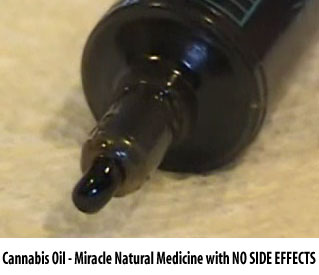
Rick Simpson, the man in the documentary below, has been making hemp oil and sharing it with friends and neighbors without charging for it. In small doses, he says, it makes you well without getting you high. “Well you can’t deny your own eyes can you?” Simpson asks. “Here’s someone dying of cancer and they’re not dying anymore. I don’t care if the medicine comes from a tomato plant, potato plant or a hemp plant, if the medicine is safe and helps and works, why not use it?” he asks.
When a person has cancer and is dying this question reaches a critical point. The bravery of Rick Simpson from Canada in showing us how to make hemp oil for ourselves offers many people a hope that should be increasingly appreciated as money dries up for expensive cancer treatments. We are going to need inexpensive medicines in the future and there is nothing better than the ones we can make reasonably cheaply ourselves.
For most people in the world it is illegal so the choice could come down to breaking the law or dying. There is no research to indicate what advantages oral use of hemp oil vs. vaporization but we can assume that advantage would be nutritional with oral intake. Dr. Budwig Below work would sustain this point of view especially for cancer patients.
The Science
According to Dr. Robert Ramer and Dr. Burkhard Hinz of the University of Rostock in Germany medical marijuana can be an effective treatment for cancer.[v] Their research was published in the Journal of the National Cancer Institute Advance Access on December 25th of 2007 in a paper entitled Inhibition of Cancer Cell Invasion by Cannabinoids via Increased Expression of Tissue Inhibitor of Matrix Metalloproteinases-1.
The biggest contribution of this breakthrough discovery, is that the expression of TIMP-1 was shown to be stimulated by cannabinoid receptor activation and to mediate the anti-invasive effect of cannabinoids. Prior to now the cellular mechanisms underlying this effect were unclear and the relevance of the findings to the behavior of tumor cells in vivo remains to be determined.
Marijuana cuts lung cancer tumor growth in half, a 2007 Harvard Medical School study shows.[vi] The active ingredient in marijuana cuts tumor growth in lung cancer in half and significantly reduces the ability of the cancer to spread, say researchers at Harvard University who tested the chemical in both lab and mouse studies.
This is the first set of experiments to show that the compound, Delta-tetrahydrocannabinol (THC), inhibits EGF-induced growth and migration in epidermal growth factor receptor (EGFR) expressing non-small cell lung cancer cell lines. Lung cancers that over-express EGFR are usually highly aggressive and resistant to chemotherapy. THC that targets cannabinoid receptors CB1 and CB2 is similar in function to endocannabinoids, which are cannabinoids that are naturally produced in the body and activate these receptors.
“The beauty of this study is that we are showing that a substance of abuse, if used prudently, may offer a new road to therapy against lung cancer,” said Anju Preet, Ph.D., a researcher in the Division of Experimental Medicine. Acting through cannabinoid receptors CB1 and CB2, endocannabinoids (as well as THC) are thought to play a role in variety of biological functions, including pain and anxiety control, and inflammation.
Researchers reported in the August 15, 2004 issue of Cancer Research, the journal of the American Association for Cancer Research, that marijuana’s constituents inhibited the spread of brain cancer in human tumor biopsies.[vii] In a related development, a research team from the University of South Florida further noted that THC can also selectively inhibit the activation and replication of gamma herpes viruses. The viruses, which can lie dormant for years within white blood cells before becoming active and spreading to other cells, are thought to increase one’s chances of developing cancers such as Kaposi’s Sarcoma, Burkitt’s lymphoma and Hodgkin’s disease.[viii]
In 1998, a research team at Madrid’s Complutense University discovered that THC can selectively induce programmed cell death in brain tumor cells without negatively impacting surrounding healthy cells. Then in 2000, they reported in the journal Nature Medicine that injections of synthetic THC eradicated malignant gliomas (brain tumors) in one-third of treated rats, and prolonged life in another third by six weeks.[ix]
Led by Dr. Manuel Guzman the Spanish team announced they had destroyed incurable brain cancer tumors in rats by injecting them with THC. They reported in the March 2002 issue of “Nature Medicine” that they injected the brains of 45 rats with cancer cells, producing tumors whose presence they confirmed through magnetic resonance imaging (MRI). On the 12th day they injected 15 of the rats with THC and 15 with Win-55,212-2 a synthetic compound similar to THC.[x]
Researchers at the University of Milan in Naples, Italy, reported in the Journal of Pharmacology and Experimental Therapeutics that non-psychoactive compounds in marijuana inhibited the growth of glioma cells in a dose-dependent manner, and selectively targeted and killed malignant cells through apoptosis. “Non-psychoactive CBD produce[s] a significant anti-tumor activity both in vitro and in vivo, thus suggesting a possible application of CBD as an antineoplastic agent.”[xi]
The first experiment documenting pot’s anti-tumor effects took place in 1974 at the Medical College of Virginia at the behest of the U.S. government. The results of that study, reported in an Aug. 18, 1974, Washington Post newspaper feature, were that marijuana’s psychoactive component, THC, “slowed the growth of lung cancers, breast cancers and a virus-induced leukemia in laboratory mice, and prolonged their lives by as much as 36 percent.”[xii]
Funded by the National Institute of Health to find evidence that marijuana damages the immune system, found instead that THC slowed the growth of three kinds of cancer in mice — lung and breast cancer, and a virus-induced leukemia. The DEA quickly shut down the Virginia study and all further cannabis/tumor research even though the researchers “found that THC slowed the growth of lung cancers, breast cancers and a virus-induced leukemia in laboratory mice, and prolonged their lives by as much as 36 percent.”
“Antineoplastic Activity of Cannabinoids,” an article in a 1975 Journal of the National Cancer Institute reports, “Lewis lung adenocarcinoma growth was retarded by the oral administration of tetrahydrocannabinol (THC) and cannabinol (CBN)” — two types of cannabinoids, a family of active components in marijuana. “Mice treated for 20 consecutive days with THC and CBN had reduced primary tumor size.”
Marijuana relieves pain that narcotics like morphine and OxyContin
have hardly any effect on, and could help ease suffering from
illnesses such as multiple sclerosis, diabetes and cancer.[xiii]
According to Devra Davis in her book Secret History of the War on Cancer, 1.5 million lives have been lost because Americans failed to act on existing knowledge about the environmental causes of cancer. It is impossible to calculate the added deaths from suppressed ‘cancer cures’ but we do know of the terrible suffering of hundreds of thousands of people who have been jailed for marijuana use.
Hemp oil with THC included has the making of a primary cancer treatment, which even alone seems to have a great chance of turning the tide against cancer tumors. It has the added advantage of safety, ease of use, lack of side effects and low cost if one makes it oneself. Surrounded by other medicinal anti-cancer substances in a full protocol it’s hard to imagine anyone failing and falling in their war on cancer.
THC should be included in every cancer protocol.
Sodium bicarbonate is another excellent anti tumor substance that reduces tumors but is much more difficult to administer than THC hemp oil. Cannabinoids are able to pass through all barriers in the body like Alpha Lipoic Acid so simple oral intake is sufficient. With bicarbonate we need intravenous applications and often even this is not sufficient, often we have to use catheters and few doctors in the world are willing to administer this way.
In the end all cancer treatments that are not promoted by mainstream oncology are illegal. No licensed doctor is going to claim that are curing cancer with sodium bicarbonate though they will treat people with cancer explaining they are balancing pH or some other metabolic profile with this common emergency room medicine found also most kitchens of the world. More than several states have passed laws making medical marijuana legal but the federal government will not relax and let people be free to choose their treatments even if their lives depend on it.
Davis notes that the cowardice of research scientists, who publish thoroughly referenced reports but pull their punches at the end, by claiming that more research needs to be done before action can be taken. Statements like these are exploited by industry that buys time to make much more money. It is a deliberate attempt that creates wholesale public doubt from small data gaps and remaining scientific uncertainties.
They have done that with everything right up to and including sunlight. Everything is thought to be dangerous except the pharmaceutical drugs which are the most dangerous substances of all. Stomach wrenching chemotherapy and the death principle of radiation are legal yet safe THC laden hemp oil is not.
It is legal for doctors to attack people with their poisons but you can go to jail for trying to save yourself or a loved one from cancer with the oil of a simple garden weed. Our civilization has put up with this insanity but there is a great price being paid. In a mad medical world people die that need not and this is a terrible sadness that has destroyed the integrity and ethics of modern medicine.
The science for the use of hemp oil is credible, specific fact-based, and is documented in detail.[xiv] There is absolutely no reason to not legalize medical marijuana and create an immediate production and distribution of THC hemp oil to cancer patients. Unfortunately we live in a world populated with governments and medical henchmen who would rather see people die cruel deaths then have access to a safe and effect cancer drug.
Meanwhile the Food and Drug Administration approved Genentech’s best-selling drug, Avastin, as a treatment for breast cancer, in a decision, according to the New York Times, “that appeared to lower the threshold somewhat for approval of certain cancer drugs. The big question was whether it was enough for a drug temporarily to stop cancer from worsening — as Avastin had done in a clinical trial — or was it necessary for a drug to enable patients to live longer, which Avastin had failed to do. Oncologists and patient advocates were divided, in part because of the drug’s sometimes severe side effects.”[xv]
The differences between Avastin and hemp oil are huge. First Avastin will earn Genentech hundreds of millions where THC hemp oil will earn no one anything. Second there are no severe or even mild side effects to taking hemp oil and lastly it is not a temporary answer but a real solution. Certainly hemp oil will ensure a longer life.
Learn more with Books about the healing power of Cannabis:


Related articles
- THC and cancer healing (biosil.wordpress.com)
- The Cancer Industry EXPOSED! Ways to Prevent and CURE Cancer (beyond2012zeitgeist.com)
- The Amazing Benefits of Hemp Seeds — Too Bad the DEA Is Curtailing the Industry (alternet.org)
- Hemp seed foods a step closer (radionz.co.nz)


 Anti Deep State Party