We have decided to implement Roberts Rules of order bringing order out of the chaos to our Meet and Greet Round Table Broadcast.

During our weekly meeting we will now start to use a simple form of Roberts Rules to keep our meeting orderly so that we don’t waste our time . http://www.robertsrules.org/

We are tired of meetings that waste our time? That is why we have decided to implement a simple form of Roberts Rules in our live Meet and Greet Round Table Broadcast !  For me bringing order out of the chaos started with a very personal mission. Our mission is simple We are dedicated to using  Roberts Rules by helping our members understand how to use Robert’s Rules of Order to get more work done!  Remember, these processes are designed to ensure that everyone has a chance to participate and to share ideas in an orderly manner. Parliamentary procedure should not be used to prevent discussion of important issues This blog post is an overview of Roberts Rules of order. Follow through this presentation to learn the basic process that you will need to be successful in our meetings or convention by using the rules.

Click to listen to our live broadcast.
BTR

Check Out Current Events Podcasts at Blog Talk Radio with AntiNewWorldOrderParty on BlogTalkRadio

Roberts Rules

July 8, 2014 at 4:22pm

 Guidelines


Obtain the floor (the right to speak) by being the first to stand when the person speaking has finished; state Mr./Madam Chairman. Raising your hand means nothing, and standing while another has the floor is out of order! Must be recognized by the Chair before speaking!Debate can not begin until the Chair has stated the motion or resolution and asked “are you ready for the question?” If no one rises, the chair calls for the vote!Before the motion is stated by the Chair (the question) members may suggest modification of the motion; the mover can modify as he pleases, or even withdraw the motion without consent of the seconder; if mover modifies, the seconder can withdraw the second.The “immediately pending question” is the last question stated by the Chair! Motion/Resolution – Amendment – Motion to PostponeThe member moving the “immediately pending question” is entitled to preference to the floor!No member can speak twice to the same issue until everyone else wishing to speak has spoken to it once!All remarks must be directed to the Chair. Remarks must be courteous in language and deportment – avoid all personalities, never allude to others by name or to motives!The agenda and all committee reports are merely recommendations! When presented to the assembly and the question is stated, debate begins and changes occur!The Rules


Point of Privilege: Pertains to noise, personal comfort, etc. – may interrupt only if necessary!Parliamentary Inquiry: Inquire as to the correct motion – to accomplish a desired result, or raise a point of orderPoint of Information: Generally applies to information desired from the speaker: “I should like to ask the (speaker) a question.”Orders of the Day (Agenda): A call to adhere to the agenda (a deviation from the agenda requires Suspending the Rules)Point of Order: Infraction of the rules, or improper decorum in speaking. Must be raised immediately after the error is madeMain Motion: Brings new business (the next item on the agenda) before the assemblyDivide the Question: Divides a motion into two or more separate motions (must be able to stand on their own)Consider by Paragraph: Adoption of paper is held until all paragraphs are debated and amended and entire paper is satisfactory; after all paragraphs are considered, the entire paper is then open to amendment, and paragraphs may be further amended. Any Preamble can not be considered until debate on the body of the paper has ceased.Amend: Inserting or striking out words or paragraphs, or substituting whole paragraphs or resolutionsWithdraw/Modify Motion: Applies only after question is stated; mover can accept an amendment without obtaining the floorCommit /Refer/Recommit to Committee: State the committee to receive the question or resolution; if no committee exists include size of committee desired and method of selecting the members (election or appointment).Extend Debate: Applies only to the immediately pending question; extends until a certain time or for a certain period of timeLimit Debate: Closing debate at a certain time, or limiting to a certain period of timePostpone to a Certain Time: State the time the motion or agenda item will be resumedObject to Consideration: Objection must be stated before discussion or another motion is statedLay on the Table: Temporarily suspends further consideration/action on pending question; may be made after motion to close debate has carried or is pendingTake from the Table: Resumes consideration of item previously “laid on the table” – state the motion to take from the tableReconsider: Can be made only by one on the prevailing side who has changed position or viewPostpone Indefinitely: Kills the question/resolution for this session – exception: the motion to reconsider can be made this sessionPrevious Question: Closes debate if successful – may be moved to “Close Debate” if preferredInformal Consideration: Move that the assembly go into “Committee of the Whole” – informal debate as if in committee; this committee may limit number or length of speeches or close debate by other means by a 2/3 vote. All votes, however, are formal.Appeal Decision of the Chair: Appeal for the assembly to decide – must be made before other business is resumed; NOT debatable if relates to decorum, violation of rules or order of businessSuspend the Rules: Allows a violation of the assembly’s own rules (except Constitution); the object of the suspension must be specified

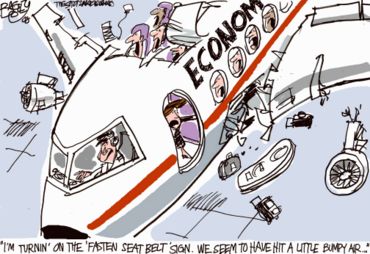
Get Prepared Doomsday is just around the corner.


Prepare for a financial Doomsday

Copied and starred from http://homesteadsurvival.blogspot.com/2012/09/prepare-for-financial-doomsday.html

Guest Post by Andy from Financial Gooru

Prepare for a financial Doomsday

Many of us are preparing for the end of times; because as we all know it it is a matter of when not if. While many of us out there are preparing for the complete collapse of the world as we know it not many of us are preparing for a Financial Doomsday which will probably happen sooner than nature going haywire on us. So how exactly do we prepare for a financial Doomsday/ Economic collapse.  Through intensive research I have found way that I think will help anyone survive and Economic/ Financial Doomsday.

Save Money
This one is a bit of a obvious one but I have to put it out there. A shockingly high number of American families are operating without any kind of financial cushion whatsoever.
-According to a Harris Interactive survey taken in 2010, 77 percent of all Americans are living paycheck to paycheck.
-According to one recent survey, one out of every three Americans would not be able to make a mortgage or rent payment next month if they suddenly lost their current job.
This is one reason why so many Americans have lost their homes and why so many Americans have fallen below the poverty level in recent years.  They simply had no cushion.
Last year, 2.6 million more Americans dropped into poverty.  That was the largest increase that we have seen since the U.S. government began keeping statistics on this back in 1959.
Don’t let this happen to you.  At a minimum, everyone out there should have a cushion that will cover at least 6 months worth of expenses.  Preferably, you should have a cushion that will last you at least a year or longer. I know that sounds like a lot but trust me you will love having this around in case something does happen to you and your family.
The easiest way I found to do this is I used to buy a cup of coffee from Quick Trip every morning, it would cost me with tax 2.02 (it was their medium size I think if I remember correctly.). Then one day I really got to thinking how much could I save if I stopped drinking coffee well at least buying it from QT every morning. So I did simple math 2.02×7 is $14.14 a week or $56.56 a month about $678.72 a year! And that was just a cup of coffee I of course cut out eating out, junk food for the most part and I am now saving well over $200 a month and putting all of that into savings. That is just one example of how I did it. I am sure there are many ways out there of saving money I have probably not even thought up of yet and I am talking about small things not drastic. Not to mention the cut of junk food has made me happier and healthier.
Investments
 Now I want to be clear with this. This is not your typical investment that I am about to talk about. But rather one more suited towards the fall of an economy and essentially the dollar. The most obvious investment you can make is to buy gold and silver. I think every person in this country is doing that at this point. While that will hold value and its all and good, you can not eat gold and silver. At one point people will want food rather than gold. So a gold and silver investment while good should not be the only investment.
Once the economy fails and everyone is running around trying to figure out what to do and items and resources become scares, everything will start becoming more localized and we will probably move back to a barter system. With that said it will be good to prepare for a barter type of system just in case it ends of that way and even if it doesn’t it will not harm you in any way. Here is what I think you will need in a barter type of system.
1. Water, The single most important item any one person can have. Drinkable water is important to life. While I would stock up a lot on this you can also invest in rain catching gear, water purifying system and other things to make undrinkable water drinkable.
2. Salt, stock up on this and start now. This one little thing that people take for granted everyday will be essential to your survival and a good thing to have in a barter system. Salt is one of the most important thing a person can have in their stock pile period. It is essential for the human body, it makes food yummy, and it can preserve food as well.
3. Spices, you think they are expensive now wait until the economy fails and governments go bankrupt and so do major companies. This one comity that people take for granted will be super rare and expensive. However, most spices and herbs can be grown almost anywhere with a little bit of knowledge.  A good website I found about some spices you can grow are http://ideas.thenest.com/dinner-recipes/cooking-advice/slideshows/easy-spices-to-grow.aspx?page=5  and http://www.tropicalpermaculture.com/growing-herbs.html these are two very good sites to get you started.
4. Live stock, food is one of those thing you have to have. While you can hunt if you do not have live stock which is a good way to get meat and other foods live stock is more beneficial. It is there when you need it you don’t have to go out and find it hopefully, you can trade it for other animals goods or services, and depending on the animal it will have many uses.
5. Other currency, while it is good to have food water etc it is also a good idea to have some form of other currency available in case you can some how assuming things are not that bad go to another country or that their currency is not completely useless. This is something I would keep around, because I do not like to assume anything like all currency will be useless and you will be trapped in this country. You just never know what life will throw at you and where you might find yourself. Therefore, I think that having some other currency like Euros, Yen, and the Australian dollar to name a few might be useful.
6. Land, I believe that land is one of those things that over time will increase in value even more so than gold. Because scientist have found a way to make artificial gold believe it or not, but they have yet to find a way without lasing our water supply it will grow in value tremendously. Not to mention land is very useful to have because you can grow food on it have life stock and the uses for land are almost limitless. Not to mention if the land has  a natural aquifer.
Like I said not your normal investment portfolio. I could spend so much more time on this but these are the 6 things I think will help you if an economy collapses.
Pay off any debt
Now this one may be a bit tricky to do since many people are having trouble meeting ends meet. But by all means try to pay off any and all debts you may have. I am going to take a guess that banks will want money owed to them if the economy starts failing to keep themselves afloat. Just because the economy fails doesn’t mean our money will be worthless. The great depression is a perfect example of that. Money was not all that worthless still had value just not as much as it does now.  This one again may be hard but I know from personal experience but it has to be done. Many things can happen if the American economy can fail don’t be caught off guard pay off any dept you may have.  I will have a completely separate blog post about this coming up soon. As I have said I was in that boat I have searched for solutions and I have found it through trial and error. I have given the advice to my friends and it worked great for them. So I will dedicate a whole blog post just to that.
Learn a Skill
Learning a skill is good even if the economy is still going strong. But a  carpenter, welder, handyman can be worth their own weight in gold. Knowing how to build and work with your hands will be skills that if the economy goes you can use to barter with. It can be almost any skill just learn one or a trade and master it. I would say master one than have 1000 that you barely know what you are doing.
These are some of things I would recommend. There is so much when it comes to this that I could make this blog post endless, yet I do have to end it at some point. Just remember what can go wrong will go wrong. Do not assume anything prepare for everything. It cant hurt to be ready it can only hurt not to be ready. As we have seen time and time again it is a matter of when not if. If you have any ideas or comments please feel free to post them and let me know how I did or if I missed something important.

http://financialgooru.blogspot.com/


Be ready for the Bank Run of 2012 Global Financial Meltdown

Bank Run
Bank Run!

Daniel J Leach

I have been saying that the Global Financial Meltdown was just around the corner for years now!  It finally looks like we are on the verge of this happening this year.  I would not be surprised if this happens in October 2012!  This is a case of history repeating itself! “Those who cannot remember the past are condemned to repeat it.” George Santayana

   A bank run occurs when a large number of bank customers withdraw their deposits because they believe the bank might fail. As more people withdraw their deposits, the likelihood of default increases, and this encourages further withdrawals. This can destabilize the bank to the point where it faces bankruptcy.[1]

The stock market crash of October 1929 left the American public highly nervous and at the time, making it the largest single bank failure in American history.

In December 1931, New York’s Bank of the United States collapsed. The bank had more than $200 million in deposits at the time, making it the largest single bank failure in American history.

The bank runs of 1930 were followed by similar banking panics in the spring and fall of 1931 and the fall of 1932. In some instances, bank runs were started simply by rumors of a bank’s inability or unwillingness to pay out funds. In December 1930, the New York Times reported that a small merchant in the Bronx went to a branch of the Bank of the United States and asked to sell his stock in the institution. When told the stock was a good investment and advised not to sell, he left the bank and began spreading rumors that the bank had refused to sell his stock. Within hours, a crowd had gathered outside the bank, and that afternoon between 2,500 and 3,500 depositors withdrew a total of $2 million in funds.


Copied from http://blog.alexanderhiggins.com

The Global Financial Meltdown has dramatically worsened as Corporations and China Jump Aboard The “Institutional” Global Bank Run As Banks Fall Apart As Their Seams.

Earlier today the world saw a global financial meltdown as investors dumped everything from stocks to commodities and literally everything in between.

Global Financial Meltdown: Investors Dump Nearly Everything Amidst Worldwide Market Crash

Global Meltdown - Investors Are Dumping Everything

Major Stock Market Indexes, Commodities, Currencies And Everything In Between Is Being Dumped By Investors Across The Globe In The Midst Of A Global Financial Meltdown.

The financial markets across the globe are facing one of the most massive sell-offs in recent memory.

The Dow Jones Industrial average has sold off over 467 points today. When and when you add that on top of 284 point drop following yesterday’s crash FED’s statement, which announced operation ‘twist’ and warned of significant downside risk and strains in global financial markets, we have a 751 point drop in the DOW since 2:45 PM est yesterday, which is the largest 2 day slump since 2008.

There are an endless parade of economic statistics many of which are the worse since the Great Depression and World War 2 era. We have also seen 111 of the s&P 500 hit fresh 52 week lows, a drop in global currencies – beside the dollar, oil dropping into the high $70 per barrel range and gold plummeting over 5% to trade in the low $1,700 per ounce range.

Business Week points out the massive crash in U.S. stocks immediately below while CNBC points out further below that this in fact a global meltdown – investors are dumping everything.

[…]

Read The Rest…

While today’s sell off was monumental and in fact is on course for the 3rd worse week on Wall Street ever, the sell-off was on the heels of the FED’s economic outlook. Today’s Global Financial Meltdown is about to become much worse as a slew of news reports out today reveal the run on the European banks has spread to include corporations and institutions pulling their money out of banks and China finally arriving at the party.

As a backdrop, the IMF warned the entire global financial systems is more vulnerable to collapse than at any other time since the 2008 financial crisis. The alarm is being sounded with the stern warning the European debt crisis could trigger the complete collapse of the entire global financial system at any minute. On the other hand, the alternative media and independent economists warn we are in fact in of a great depression style collapse. The only difference is this time around we would be facing a global depression. But as the ship their countrymen sail on continues to sink, bureaucrats continueto play politics and put their partisan interests above the interest of their constituents.

The run on European banks has already began with from the customers pulling their money from banks some time ago. While the corporate media kept the run on the Greece banks on the hush the media blackout didn’t stop the run nor did it stop the run from spreading to other nations. Simply put, the public is learning they can’t trust their governments and they can’t trust the media. Indeed the withdrawal of deposits from the banks in Greece has quietly spread across the other European nations only to spread into some of the supposedly most stable banks in the Euro-zone, the French banks.

Now we have learned the run on the banks that was originally limited to customers has now spread to include corporate and institutional clients withdrawing their money from the banks. First, we caught wind of the rumor that Siemens pulled its cash from one of the French banks. Then came theconfirmation came that Siemens pulled $500 million Euros from Societe Generale. Siemens of course is a huge conglomerate. For such a huge corporation to lose trust in one of the supposedly most stable of the French banks is clearly a very significant development. To be clear, the ramification have simply rocked the markets and the many more corporations soon will follow. In fact, some corporations and nations have followed their lead.

Consider the breaking news that The Bank of China has stopped doing business with four major European banks. To be exact thy have stopped trading swaps and foreign exchange forwards with the Societe Gnerale, BNP Paribas, Credit Agricole and the Swiss banking giant UBS.

Speaking of BNP Paribas, Reggie Middleton – who long predicted the collapse of Lehman’s and Bear Stearns far ahead of anyone else because of their shady banking practices – has been warning for months BNP Paribas is ripe for a Lehman style collapse. Reggie argues that BNP Paribas is engaging in the same practices and fraud that caused Lehman’s and Bear Stearn’s to collapse.

While on the subject of China, we learn today they are not immune to the bank run either. China Securities Journal reveals that 420 billion yuan have been pulled out of the big four state-owned Chinese bank during the 15 days of September. Even bank employees are pulling their deposits from the banks as it is estimated that three trillion yuan has been diverted to illegal money lenders which pay interest rates 10 times higher than the one-year Chinese bank deposit rate.

Today we also learn that Insurer Lloyd’s of London confirmed it’s withdrawing deposits from all of the European banks for fear they may collapse. The rationalization for their withdrawal is quite simple – if world is worried about the European governments themselves collapsing then on must assume the sovereign debt collapse will also cause the banks themselves to collapse.

Still that message doesn’t seem to be reaching the retail banking client and the corporate owned media is to blame for repeatedly assuring the public there bank deposits are safe because the banks are insured by their respective European government.

When we see corporations not buying the propaganda being pushed by the media and instead withdrawing their deposits that should be a clear sign to the retail client it is time to withdraw their deposits. Unfortunately, too many people believe their governments and the media would never lie to them so some of them will unfortunately need to learn the hard way.

However, anyone keeping up with the details of latest financial news that doesn’t quite make the headlines knows that banks across the world have been hit with a parade of credit rating cuts warning of their risk of collapse. Those same cuts have been coupled with recent credit rating cuts of the sovereign of nations themselves, most notably the credit downgrades of the United States and Italy.

Adding to the bleak reality a global financial collapse may be imminent is the fact that 9 Banks failed last years EU stress test and another 16 barely passed the test. Yet instead of being proactive and shoring up capital to assure the survival of financial turmoil, we have seen many banks continue to conduct business in absolute denial they were at risk. In ignorance of reality the banks have sat around for over a year knowing they are at risk of collapse while doing little to nothing the improve their situation. Why should they act? They know when shit hits the fan taxpayers will be bent over the barrel and be forced to give the banks billions in bailouts from which the executives will collect lavish bonuses.

Now we have warnings from top economists and the FED that there is significant downside risk and strains in the global financial system that threatens the entire system. The is coupled with warnings from the IMF and EU leaders to immediately recapitalize the banks or face collapse. The calls for recapitalization have persisted for weeks with no action taken to stave off the collapse. Meanwhile, the consequences of not acting immediately continue to become more severe by the day.

The EU credit markets have frozen up and the situation is now beyond the point of dire. The question is which bank will be the first to collapse.

While all eyes seem to be focused on the Euro banks across the pond, banks back in the US are not immune from the crisis and neither are the Chinese banks.

In fact, Bank of America has been hammered by the alternative media as needing capitalization but BAC has denied those allegations and the corporate media has dismissed the alternative media reports as comments from fringe blogs. Until today that is.

Pimco’s Mohamed El-Erian raised the alarm today about the health of French banks and went on to point out there is an institutional run on thosebanks.

CNBC, went on to use the metrics El-Erain used to measure the health of the French banks to measure the health of US banks and found US banks aren’t nearly as healthy as Wall Street would like to believe.

Absolutely know the the Truth about the Shroud of Turin

By:Daniel J Leach

Many claim that The Shroud of Turin is Jesus Christ but the  Knights Templar claim that this is Jacques de Molay.  I myself would like to think that this is Jesus Christ but with my research and understanding of history tend to lead me to believe that this is indeed Jacques de Molay and not Jesus Christ.

Geoffroi de Charny (the French Knight who died at the 1356 battle of Poitiers) and his wife Jeanne de Vergy are the first reliably recorded owners of the Turin Shroud. This Geoffroi participated in a failed crusade under Humbert II of Viennois in the late 1340s.[26] He is sometimes confused with Templar Geoffroi de Charney.[27]

This Section Copied from: http://blog.templarhistory.com/2010/03/the-templars-and-the-shroud-of-turin/

Any discussion of the Shroud of Turin is bound to be controversial. Those who view this sacred and holy relic fall into two camps, those that believe it to be the undisputed earthly evidence of a Christ risen and those who believe it to be a medieval forgery.

It is not the intention of this web site to cast doubt on or support the authenticity of the shroud, but rather to show its possible relationship to the Knights Templar. We receive many letters from angry people who wish to enter into lengthy debates about carbon 14 reliability. We are aware of new evidence that puts the reliability of carbon 14 dating in question, so please refrain from telling us of the findings or directing us to URLs that make the claims.

There are two theories that relate to the Templars having been involved with the Shroud, one, which would support the authenticity of the Shroud and another, which would refute it.

In 1204 the Crusaders sacked the city of Constantinople. Among them were the Knights Templar, whom some scholars contend took the Burial shroud of Jesus from the city. To support this theory, author Ian Wilson who wrote the book “The Shroud of Turin: Burial Cloth Of Jesus?” makes the claim that the head that the Templars were accused of worshipping was none other than that of Jesus. His belief is that the Shroud when folded depicted the head of Christ and was referred to as the “Mandylion.” There is a painted panel at Templecombe in England that shows a bearded head like that, which is depicted on the Mandylion.

In their two books, “The Hiram Key” and “The Second Messiah,” authors Christopher Knight and Robert Lomas paint a contrasting picture to the Mandylion theory. The authors theorize that the image on the Shroud of Turin is in fact that of the last Grand Master of the order, Jacques de Molay, who was tortured some months before his execution in 1307. The image on the shroud certainly does fit the description of de Molay as depicted in medieval wood cuts, a long nose, hair shoulder length and parted in the center, a full beard that forked at its base, not to mention the six-foot frame. De Molay was said to be quite tall.

However, many have criticized the theory on the basis that the Templar rule of order forbade the Templars from growing their hair long. What critics of the theory overlook is that during DeMolay’s seven years in prison it is highly unlikely that he would have been afforded such luxuries as good grooming.

Knight and Lomas claim that the shroud figured in the Templars rituals of figurative resurrection and that DeMolay’s tortured body was wrapped in a shroud, which the Templars kept after his death. Lomas and Knight further believe that lactic acid and blood from DeMolay’s tortured body mixed with frankincense (used to whiten the cloth) etching his image into the shroud.

When the shroud was first put on display in 1357 (50 years after the disbanding of the order) by the family of Geoffrey de Charney who was also burned at the stake with de Molay, the first people viewing the shroud recognized the image to be that of Christ.

The authors theorize that Jacques de Molay may have been tortured in a manner similar to Christ as a mockery. Certainly then, the wounds suffered by de Molay where the same as those of Jesus Christ on the Cross.

Today it is commonly believed by many, through carbon dating, that the shroud dates to the late 13th century and not to the date of Christ’s supposed crucifixion. It is interesting that the church revealed these carbon dating results on October 13th, 1989, which is the same day the Templars were arrested by Church and State. According to the authors:

“Carbon dating has conclusively shown that the Shroud of Turin dates from between 1260 and 1380, precisely as we would expect if it were the image of Jacques de Molay. There is no other known theory that fits the scientifically established facts. Through experimentation, we know that the figure on the Shroud was on a soft bed of some kind, which strongly suggests that the victim was not dead and was expected to recover.”

The Second Messiah pg. 161 – Christopher Knight and Robert Lomas

Regardless of whether the findings of Ian Wilson or Knight and Lomas are correct, it is evident that this most holy and venerated relic has found its way into the Templar mythos.

Lynn Picknet and Clive Prince, authors of “Turin Shroud: In Whose Image?” present another theory of interest on the matter. Readers will recognize the authors from the book, “The Templar Revelation.” In the authors’ earlier book the duo claim that Leonardo Da Vinci who created an early photographic technique manufactured the image on the shroud of Turin.

Stephanie Pappas
Live Science
Thu, 05 Apr 2012 17:01 CDT
Print

Shroud of Turin

© Public domain
Full-length negative photograph of the Shroud of Turin.

A hoax or a miracle? The Shroud of Turin has inspired this question for centuries. Now, an art historian says this piece of cloth, said to bear the imprint of the crucified body of Jesus Christ, may be something in between.

According to Thomas de Wesselow, formerly of Cambridge University, the controversial shroud is no medieval forgery, as a 1989 attempt at radiocarbon dating suggests. Nor is the strange outline of the body on the fabric a miracle, de Wesselow writes in his new book, The Sign: The Shroud of Turin and the Secret of the Resurrection (Dutton Adult, 2012). Instead, de Wesselow suggests, the shroud was created by natural chemical processes – and then interpreted by Jesus’ followers as a sign of his resurrection.

“People in the past did not view images as just the mundane things that we see them as today. They were potentially alive. They were seen as sources of power,” de Wesselow told LiveScience. The image of Jesus found on the shroud would have been seen as a “living double,” he said. “It seemed like they had a living double after his death and therefore it was seen as Jesus resurrected.”

Believing the shroud

As de Wesselow is quick to admit, this idea is only a hypothesis. No one has tested whether a decomposing body could leave an imprint on shroud-style cloth like the one seen on the shroud. A 2003 paper published in the journal Melanoidins in Food and Health, however, posited that chemicals from the body could react with carbohydrates on the cloth, resulting in a browning reaction similar to the one seen on baked bread. (De Wesselow said he knows of no plans to conduct an experiment to discover if this idea really works.)

Perhaps more problematic is the authenticity of the shroud itself. Radiocarbon dating conducted in 1988 estimated the shroud to medieval times, between approximately A.D. 1260 and 1390. This is also the same time period when records of the shroud begin to appear, suggesting a forgery.

Critics have charged that the researchers who dated the shroud accidentally chose asample of fabric added to the shroud during repairs in the medieval era, skewing the results. That controversy still rages, but de Wesselow is convinced of the shroud’s authenticity from an art history approach.

“It’s nothing like any other medieval work of art,” de Wesselow said. “There’s just nothing like it.”

Among the anachronisms, de Wesselow said, is the realistic nature of the body outline. No one was painting that realistically in the 14th century, he said. Similarly, the body image is in negative (light areas are dark and vice versa), a style not seen until the advent of photography centuries later, he said.

“From an art historian’s point of view, it’s completely inexplicable as a work of art of this period,” de Wesselow said.

Resurrection: spiritual or physical?

If de Wesselow’s belief in the shroud’s legitimacy is likely to rub skeptics the wrong way, his mundane explanation of how the image of Jesus came to be is likely to ruffle religious feathers. According to de Wesselow, there’s no need to invoke a miracle when simple chemistry could explain the imprint. It’s likely, he says, that Jesus’ female followers returned to his tomb to finish anointing his body for burial three days after his death. When they lifted the shroud to complete their work, they would have seen the outline of the body and interpreted it as a sign of Jesus’ spiritual revival.

From there, de Wesselow suspects, the shroud went on tour around the Holy Land, providing physical proof of the resurrection to Jesus’ followers. When the Bible talks about people meeting Jesus post-resurrection, de Wesselow said, what it really means is that they saw the shroud. He cites the early writings of Saint Paul, which focus on a spiritual resurrection, over the gospels of Mark, Matthew, Luke and John, which were written later and invoke physical resurrection.

“The original conception of the resurrection was that Jesus was resurrected in a spiritual body, not in his physical body,” de Wesselow said.

These ideas are already receiving pushback, though de Wesselow says he’s yet to get responses from people who have read his entire book. Noted skeptic Joe Nickell toldMSNBC’s Alan Boyle that de Wesselow’s ideas were “breathtakingly astonishing,” and not in a good way; Nickell has argued on multiple occasions that the shroud’s spotty historical record and too-perfect image strongly suggest a counterfeit.

On the other end of the religious spectrum, former high-school teacher and Catholic religious speaker David Roemer believes in Jesus’ resurrection, but not the shroud’s authenticity. The image is too clear and the markings said to be blood aren’t smeared as they would be if the cloth had covered a corpse, Roemer told LiveScience.

“When you get an image this detailed, it means it was done by some kind of a human being,” Roemer said.

Unlike many “shroudies,” as believers are deprecatingly called, Roemer suspects the shroud was deliberately created by Gnostic sects in the first or second century. A common religious explanation for the markings is that a flash of energy or radiation accompanied Christ’s resurrection, “burning” his image onto the cloth.

If anything is certain about de Wesselow’s hypothesis, it’s that it is not likely to settle the shroud controversy. Scientific examinations of the delicate cloth are few and far between – and so are disinterested parties. Roemer, for example, recently arrived at a scheduled talk at a Catholic church in New York only to find the talk had been canceled when the priest learned of Roemer’s shroud skepticism. (The Catholic Church has no official position on the shroud’s authenticity.)

Meanwhile, de Wesselow said, people who aren’t driven by faith to accept the cloth as real generally don’t care about the shroud at all.

“The intellectual establishment, if you like, is not interested in shroud science,” he said. “It regards it as fringe and it’s not interested.”

Create a website or blog at WordPress.com

Up ↑