| The 911 Truth Party Along with many other 911 truth organizations have worked for years to bring to the surface the evidence that has been hidden from the world by corrupt governments and corrupt corporations that control the mainstream media as well as the justice systems around the world. Ithas been established beyond any reasonable doubt that the official account of 9/11 is a lie and was a false Flag event and that the, official “investigations” was a cover-up operation.Scholars and professionals with various kinds ofexpertise–including architects, engineers, firefighters, intelligence officers, lawyers, medical professionals, military officers, philosophers, religious leaders, physical scientists, and pilots–have spoken out about radical discrepancies between the official account of the 9/11 attacks and what they, as independent researchers, have learned. but thus far ignored by governments and the mainstream media.
Our organization, the 911 Truth Party has been formed to find Patriots in Washington DC or, for that matter, in other country’s around the world who belive that 911 was an inside job and are willing to run for political office to be leaders who are, calling for a new, independent investigation of 9/11 that takes account of the evidence that has been documented by independent researchers. The Official 911 Truth Party, has been formed to help bring about such a response. because We believe that the truth about 9/11 has been exposed now and it has not taken 50 years or become a footnote in the history books! the policies that have been based on the Bush-Cheney administration’s interpretation of the 9/11 attacks must be Nullified by Political leaders who are willing to take a stand for Justice and who know that 911 was an Inside Job. An “independent” investigation means, specifically, independent from the U.S. administrations that were in power prior to, and at the time of, the 9/11 attacks, who might have things to hide. As shown by New York Times writer Philip Shenon in his 2008 book, The Commission, the 9/11 Commission was run by its executive director, Philip Zelikow, and he was very closely associated with the Bush administration. The National Institute of Standards and Technology (NIST), which issued the official reports on the destruction of the World Trade Center, is an agency of the U.S. Department of Commerce, which means that, while writing these reports, it was an agency of the Bush-Cheney administration. We need an investigation that is free from such conflicts of interest. We along with Political Leaders for 9/11 Truth believe that If you hold, or have held, a political office–whether elected or appointed, whether municipal, state, provincial, national, or international–or have been elected to lead a recognized political party, you are invited to look at our petition (click on “Petition and Members list” under the Main Menu). If you decide to join, go to the Sign the Petition page. Becoming a member of Political Leaders for 9/11 Truth will not require any time beyond that which it takes to sign the petition–although additional activity to spread 9/11 truth is, of course, encouraged. Important 911 Links |
|---|
Will The Real Knights Templar Please Stand Up


FOR $1,000,000: SPOT THE FAKE OR DISSOLVED ORGANIZATION
Order/Knights of Malta
Knights Templar
Papal Knights
Knights of Columbus
Knights of the Holy Sepulchre
Swiss Guard
Jesuits
Legion of Christ
Opus Dei
Illuminati
Freemasons
-
 Jonathan Gillenson I’m pretty sure the Knights Templar were disolved (at least to the best of my knowledge). I don’t know of a group called the Papal Knights ever existing but I may have to dive deeper into Church history. To my knowledge there was a group called the Illuminati, but Dan Brown exaggerates their involvement and unless I’m mistaken they have completely dissolved themselves.
 -
 John McGuire The Papal Knights are a matter of mainstream news and public record.
 -
 Jonathan Daniel Bennett Templars were dissolved eight centuries ago; “Papal Knights” could refer to a number of chivalric orders; Weishaupt’s Illuminati was largely destroyed by the Bavarian government in the late 1700s, although many conspiracy theories involve their continuation in various ways and in various places.
 -
John McGuire Ten years before the Jesuits, Ignatius of Loyola founded the ALUMBRADOS, i.e. Enlightened Ones or Illuminati in Spain. The group mysteriously disbanded before the Jesuits were founded.
-
Jonathan Daniel Bennett Ok. Where’s my million dollars?
-
 Daniel J Leach Nope the Nights Knigh Templar are still an active grouphttp://www.knightstemplar.org/
 Official Web Site for the Grand Encampment Knights Templar
 -
John McGuire No dice, Ionatan.
-
Jonathan Daniel Bennett There are dozens of groups calling themselves Templars, but the actual Order of the Poor Fellow-Soldiers of Christ and of the Temple of Solomon, founded in in the early 12th century were officially dissolved by papal decree in 1312.
-
John McGuire Disavowed not dissolved.
-
 Duc de Berwick Knights Templar were dissolved, the Knights of St. John had a schism sometime during Napoleon so they could be fake.
 -
John McGuire This site claims Templars alive and well: papalknights.org
-
John McGuire This site claims Templars alive and well: papalknights.org/
-
Daniel J Leach http://papalknights.org

papalknights.org
The Supreme Order of ChristThe Order of the Golden SpurThe Order of Saint Pius IXThe Order of Saint Gregory the GreatThe Order of Saint Sylvester -
John McGuire This site claims Templars alive and well: http://papalknights.org/
papalknights.org
The Supreme Order of ChristThe Order of the Golden SpurThe Order of Saint Pius IXThe Order of Saint Gregory the GreatThe Order of Saint Sylvester -
Jonathan Daniel Bennett It was papal decree which brought them into being, it was papalauthority underwhich the Order operated, and it was the pope who suppressed and dissolved. Whatever members of the Knights Templar survived and defied the ban by continuing to function, and whatever modern groups refer to themselves as Templars, the original Order no longer exists.
-
Jonathan Daniel Bennett As I said, there are dozens of groups (some even within the Church) which tap the Templar legacy, but the Order itself no longer exists.
-
John McGuire A papal decree brought them under the pope, papal authority disowned them. No cigar.
-
John McGuire No longer exists as a papist entity. WE GET IT.
-
John McGuire No longer exists as a papist entity. WE GET IT. STOP SPAMMING.
-
Jonathan Daniel Bennett You do not understand how Catholic religious orders function then.
-
Duc de Berwick No you are wrong John. The Templars were duty bound and could report only to the Pope, hence many feudal lords in the Levant used to get very angry with the knights for they could not question them or make them show cause when asked upon.
-
John McGuire Actually I do. Organizations that fall out of the pope’s favor do not magically disappear except in papo-fairyland of course.
-
Duc de Berwick Thus the earlier point stands that the Pope gave them their existence and even took away their role to exist.
-
Jonathan Daniel Bennett I’m pointing out some basic historical facts in response to a rather odd topic post. I’m not spamming. Really John, I like a lot of what you post, but I’m not sure where you are trying to go with this.
-
John McGuire Organizations that fall out of the pope’s favor do not magically disappear except in papo-fairyland of course.
-
Daniel J Leach This is a good conversation very informative! Where or not they are still who they were doesn’t matter it is only one NWO organization out of thousands that or in the same league of secret society’s that want to build a New World Order Government and none of the work they do is of any good to humanity.
-
John McGuire I’ll go wherever solid fact takes me.
-
John McGuire “Role to exist”? That’s not even cogent.
-
Duc de Berwick Though the Knights of St. John is a murky issue, I am very confident that the templars do not exist anymore after they were suspended by the Pope in connivance with Philip IV of France.
-
Jonathan Daniel Bennett The Order as an organization did indeed cease to exist. Whatever organizations and institutions came out of it, or were based upon it, are a completely different matter and open to much speculation, but the Knights Templar, being under papal authority, were validly dissolved by that same authority.
-
Duc de Berwick Exactly
-
John McGuire Did the pope found the Knights Templar? I don’t think so.
-
Daniel J Leach I have no idea but the same groups still are trying to rule the world!
-
Duc de Berwick But he passed a decree for it’s creation.
-
John McGuire Sorry, but you need to realize my reading of history doesn’t rely on the Roman Patriarch as some kind of supreme dictator of all reality. And that’s why you sound like a clashing gong to my ears.
-
Daniel J Leach Its poinless to say if they are the same group or not the next group still has the same goal as the first!
-
John McGuire The Nicaean Church fell out of favor with the Emperor. Does that mean the Christian Church no longer exists?
-
Daniel J Leach Good point John McGuire!
-
Jonathan Daniel Bennett No, like most Catholic religious orders, the Knights Templar were not founded directly by the pope, but under local episcopal and noble authority before- having grown in numbers and prominence- brought themselves direct papal authority.
I realize you are not Catholic, but to recognize some how the history of the Templars and the role and functions of religious orders like the Templars works within the Church is completely separate from submitting to Roman obedience yourself. -
Jonathan Daniel Bennett The Emperor never issued a decree dissolving the entirety of the Church.
-
Duc de Berwick Fine if the Order was not founded or created by the Pope, at least they were allied to the Pope. Does that suffice?
-
John McGuire No, but he defined it as Arian.
-
Jonathan Daniel Bennett And his successors reversed that.
-
Jonathan Daniel Bennett As was their prerogative.
-
John McGuire Alliances come and go but do not fully define an organization.
-
John McGuire So, Jonathan, if a future pope reinstates the Knights Templar, then suddenly they will never have ceased to exist? You’re loyal, I’ll give you that much.
Related articles
- Pope recognizes Knights Templar – History.com This Day in History – 1/13/1128 (worldhistoryreview.org)
- The Knights Templar and money lending (thetemplarknight.com)
- Knights Templar Criminal Cartel 10 arrested (pikapvs.com)
- Vatican celebrates Knights of Malta’s 900 years (sacbee.com)
- Knights of Columbus Launch Prayer Campaign During Papal Transition (deaconjohnspace.wordpress.com)
- Knights of Columbus Launch Prayer Campaign During Papal Transition (sacbee.com)
- James A. Marples letter: Catholic Church needs a ‘modern’ leader in next pope (reporternews.com)
All about the International Christian Party
Christian theology and Faith has been around for more than 2000 years and 2012 is the first time that we have seen an attempt to bring the Christian family together to support Christian Political Campaigns on a Global Scale. If you looking to be part of a truly grassroots Truth and Liberty movement this is a good place to start.
www.InternationalChristianParty.com
InternationalChristianParty is a political ideology that seeks to apply Christian principles to public policy. It emerged in United States of America in the city Rochester NY under the influence of conservatism and Ron Paul’s teachings. InternationalChristianParty.com is a “Non-denominational“ institution that is not formally aligned with an established denomination, or that remains otherwise officially autonomous. International Christian Party explicitly rejects the idea of a formalized denominational structure as a matter of principle, holding that each congregation is better off being autonomous. InternationalChristianParty.com consider ourselves simply “Christians”. Non-denominationalism should not be confused with interdenominationalism, or ecumenism.
The leaders we elect have great influence on our freedoms. They can choose to protect our right to worship and spread the gospel, or they can restrict those rights. They can lead our world toward righteousness or toward moral disaster. Clearly, the more committed Christians that are part of government—whether at the local, state, or federal level—the more our religious freedoms will be guarded. Christians in politics can effect desperately needed changes in the culture. A prime example is William Wilberforce, a 19th century English politician who campaigned for decades to end the abominable slave trade that flourished at that time. His campaign was eventually successful, and he is lauded today for his courage and commitment to Christian principles.
There is nothing wrong with Christians being involved in politics, as long as they remember that we are to be ambassadors for Christ on earth. That is our primary job description and our goal is to appeal to others to be reconciled to God through Jesus (2 Corinthians 5:20 ). Paul tells us that whatever we do, we are to do it for the glory of the Lord, not our own (1 Corinthians 10:31 ; Colossians 3:17 ). If a Christian does seek office, it should only be if he/she can faithfully execute the duties of that office to the glory of God and without compromising Christian principles.
In Romans 13:1-4 we read: “Let every soul be subject unto the higher powers. For there is no power but of God: the powers that be are ordained of God. Whosoever therefore resisteth the power, resisteth the ordinance of God: and they that resist shall receive to themselves damnation. For rulers are not a terror to good works, but to the evil. Wilt thou then not be afraid of the power? do that which is good, and thou shalt have praise of the same: For he is the minister of God to thee for good. But if thou do that which is evil, be afraid; for he beareth not the sword in vain: for he is the minister of God, a revenger to execute wrath upon him that doeth evil.”
We must always remember that our “kingdom is not of this world.” (John 18:36). If we become conformed to the ways of this world, how can we then “be counted worthy of the kingdom of God, for which ye also suffer.” (I Thessalonians 1:5). Are you suffering because you’re resisting the kingdom of Antichrist, or are you committing spiritual fornication by living deliciously with him? (Revelation 18:9). When criminal elements have a position of control and authority within the government, believers have an obligation to resist them–not to twist the scriptures into justification for compliance with an ungodly government. In Damascus, the Jews that had authority under the governmental edict establishing their position (John 11:48) sought to murder Saul (Acts 9:23). Saul escaped over the wall as he left Damascus. That sounds like resistance to me.
In practice, the International Christian Party is considered conservative on cultural, social and moral issues ( not social conservatism) and advocates a Austrian Economic Society in the economic field (crossing over with Market economy and sabbath economics but based on the family). Jesus made his reputation as a Jewish economist, one with very strong opinions about wealth and property, about the relationship between the rich and the poor. We believe that the free market, reviled by people who do not understand it, is the most just and humane economic system and the greatest engine of prosperity the world has ever known. ”There is no theme more common to Jesus’s storytelling than sabbath economics,” he says. ”He promises poor sharecroppers abundance, but threatens absentee landowners and rich householders with judgment.”
In the Nations, where their opponents have traditionally been secularist socialists, the International Christian parties are conservative overall.
Like the Ron Paul’s Campaign for Liberty organization “We believe with Ludwig von Mises, Henry Hazlitt, and F.A. Hayek that central banking distorts economic decisionmaking and misleads entrepreneurs into making unsound investments. Hayek won the Nobel Prize for showing how central banks’ interference with interest rates sets the stage for economic downturns. And the central bank’s ability to create money out of thin air transfers wealth from the most vulnerable to those with political pull, since it is the latter who receive the new money before the price increases it brings in its wake have yet occurred. For economic and moral reasons, therefore, we join the great twentieth-century economists in opposing the Federal Reserve System, which has reduced the value of the dollar by 95 percent since it began in 1913.” Campaign for Liberty
Many members of the International Christian Party identify themselves as liberty-minded individuals, and the organization states that it includes “limited government conservatives, classical liberals, and libertarians.”[21] These individuals are greatly influenced primarily by the works of Ludwig von Mises, Friedrich Hayek, Henry Hazlitt, Frederic Bastiat, Murray Rothbard, Thomas E. Woods, and Ron Paul.[22]
Our World is going bankrupt, and no sensible proposals are even on the table.
We also believe in a noninterventionist foreign policy. Inspired by the old Robert Taft wing of the American Republican Party.
All ABOUT ONE VETERAN’S BATTLE AGAINST FORCED VACCINATIONS, THE GOOD, THE BAD, THE UGLY!

About
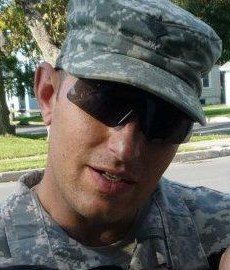 This is me, Sean Niemi. Or, at least, it WAS me. Last year when I was still an Army Combat Medic. I am a happily married man with 5 sons and 1 daughter. Yeah, I know… HUGE family! Anyway, until April 2, 2012 I was in the Army, I served 2 Combat deployments (1 each to Iraq and Afghanistan) and was doing something I loved… helping people be healthy. Unfortunately, I wasn’t very good at doing “the Army thing” and consistently informed my soldiers that the root problems to most of their aches and pains were unhealthy lifestyles. The Army wanted me to just treat the symptoms and send the guys back out to the front lines. I always looked for the underlying cause of their ailments and tried to help fix them. Imagine that! A medical professional actually trying to HEAL people instead of just masking their problems with drugs and medications. Needless to say, I wasn’t very popular with the HOOAH HOOAH types and once I requested a Religious Exemption from vaccines/immunizations I was threatened, (in more ways than one…. read my early posts on here for the whole sordid story), and eventually given my walking papers. I don’t necessarily see my current state as punishment. I see it more as an opportunity, an opportunity to finally tell the truth about what has happened to me. An opportunity to try and help others going through similar situations in their own lives. Good luck to all of you and …. Happy Reading.
This is my story of what I have been through while trying to exercise my Constitutionally guaranteed rights to not be vaccinated in accordance with my religious beliefs.
****Please: make sure to check out my blog at
http://www.vaccinebattles.wordpress.com
and my Facebook page at
http://www.facebook.com/pages/Soldier-wins-fight-against-forced-military-vacc…
Absolutely know the the Truth about the Shroud of Turin


Many claim that The Shroud of Turin is Jesus Christ but the Knights Templar claim that this is Jacques de Molay. I myself would like to think that this is Jesus Christ but with my research and understanding of history tend to lead me to believe that this is indeed Jacques de Molay and not Jesus Christ.
Geoffroi de Charny (the French Knight who died at the 1356 battle of Poitiers) and his wife Jeanne de Vergy are the first reliably recorded owners of the Turin Shroud. This Geoffroi participated in a failed crusade under Humbert II of Viennois in the late 1340s.[26] He is sometimes confused with Templar Geoffroi de Charney.[27]

This Section Copied from: http://blog.templarhistory.com/2010/03/the-templars-and-the-shroud-of-turin/
Any discussion of the Shroud of Turin is bound to be controversial. Those who view this sacred and holy relic fall into two camps, those that believe it to be the undisputed earthly evidence of a Christ risen and those who believe it to be a medieval forgery.
It is not the intention of this web site to cast doubt on or support the authenticity of the shroud, but rather to show its possible relationship to the Knights Templar. We receive many letters from angry people who wish to enter into lengthy debates about carbon 14 reliability. We are aware of new evidence that puts the reliability of carbon 14 dating in question, so please refrain from telling us of the findings or directing us to URLs that make the claims.
There are two theories that relate to the Templars having been involved with the Shroud, one, which would support the authenticity of the Shroud and another, which would refute it.
In 1204 the Crusaders sacked the city of Constantinople. Among them were the Knights Templar, whom some scholars contend took the Burial shroud of Jesus from the city. To support this theory, author Ian Wilson who wrote the book “The Shroud of Turin: Burial Cloth Of Jesus?” makes the claim that the head that the Templars were accused of worshipping was none other than that of Jesus. His belief is that the Shroud when folded depicted the head of Christ and was referred to as the “Mandylion.” There is a painted panel at Templecombe in England that shows a bearded head like that, which is depicted on the Mandylion.
In their two books, “The Hiram Key” and “The Second Messiah,” authors Christopher Knight and Robert Lomas paint a contrasting picture to the Mandylion theory. The authors theorize that the image on the Shroud of Turin is in fact that of the last Grand Master of the order, Jacques de Molay, who was tortured some months before his execution in 1307. The image on the shroud certainly does fit the description of de Molay as depicted in medieval wood cuts, a long nose, hair shoulder length and parted in the center, a full beard that forked at its base, not to mention the six-foot frame. De Molay was said to be quite tall.
However, many have criticized the theory on the basis that the Templar rule of order forbade the Templars from growing their hair long. What critics of the theory overlook is that during DeMolay’s seven years in prison it is highly unlikely that he would have been afforded such luxuries as good grooming.
Knight and Lomas claim that the shroud figured in the Templars rituals of figurative resurrection and that DeMolay’s tortured body was wrapped in a shroud, which the Templars kept after his death. Lomas and Knight further believe that lactic acid and blood from DeMolay’s tortured body mixed with frankincense (used to whiten the cloth) etching his image into the shroud.
When the shroud was first put on display in 1357 (50 years after the disbanding of the order) by the family of Geoffrey de Charney who was also burned at the stake with de Molay, the first people viewing the shroud recognized the image to be that of Christ.
The authors theorize that Jacques de Molay may have been tortured in a manner similar to Christ as a mockery. Certainly then, the wounds suffered by de Molay where the same as those of Jesus Christ on the Cross.
Today it is commonly believed by many, through carbon dating, that the shroud dates to the late 13th century and not to the date of Christ’s supposed crucifixion. It is interesting that the church revealed these carbon dating results on October 13th, 1989, which is the same day the Templars were arrested by Church and State. According to the authors:
“Carbon dating has conclusively shown that the Shroud of Turin dates from between 1260 and 1380, precisely as we would expect if it were the image of Jacques de Molay. There is no other known theory that fits the scientifically established facts. Through experimentation, we know that the figure on the Shroud was on a soft bed of some kind, which strongly suggests that the victim was not dead and was expected to recover.”
The Second Messiah pg. 161 – Christopher Knight and Robert Lomas
Regardless of whether the findings of Ian Wilson or Knight and Lomas are correct, it is evident that this most holy and venerated relic has found its way into the Templar mythos.
Lynn Picknet and Clive Prince, authors of “Turin Shroud: In Whose Image?” present another theory of interest on the matter. Readers will recognize the authors from the book, “The Templar Revelation.” In the authors’ earlier book the duo claim that Leonardo Da Vinci who created an early photographic technique manufactured the image on the shroud of Turin.
Stephanie Pappas
Live Science
Thu, 05 Apr 2012 17:01 CDT
Live Science
Thu, 05 Apr 2012 17:01 CDT


© Public domain
Full-length negative photograph of the Shroud of Turin.
Full-length negative photograph of the Shroud of Turin.
A hoax or a miracle? The Shroud of Turin has inspired this question for centuries. Now, an art historian says this piece of cloth, said to bear the imprint of the crucified body of Jesus Christ, may be something in between.
According to Thomas de Wesselow, formerly of Cambridge University, the controversial shroud is no medieval forgery, as a 1989 attempt at radiocarbon dating suggests. Nor is the strange outline of the body on the fabric a miracle, de Wesselow writes in his new book, The Sign: The Shroud of Turin and the Secret of the Resurrection (Dutton Adult, 2012). Instead, de Wesselow suggests, the shroud was created by natural chemical processes – and then interpreted by Jesus’ followers as a sign of his resurrection.
“People in the past did not view images as just the mundane things that we see them as today. They were potentially alive. They were seen as sources of power,” de Wesselow told LiveScience. The image of Jesus found on the shroud would have been seen as a “living double,” he said. “It seemed like they had a living double after his death and therefore it was seen as Jesus resurrected.”
Believing the shroud
As de Wesselow is quick to admit, this idea is only a hypothesis. No one has tested whether a decomposing body could leave an imprint on shroud-style cloth like the one seen on the shroud. A 2003 paper published in the journal Melanoidins in Food and Health, however, posited that chemicals from the body could react with carbohydrates on the cloth, resulting in a browning reaction similar to the one seen on baked bread. (De Wesselow said he knows of no plans to conduct an experiment to discover if this idea really works.)
Perhaps more problematic is the authenticity of the shroud itself. Radiocarbon dating conducted in 1988 estimated the shroud to medieval times, between approximately A.D. 1260 and 1390. This is also the same time period when records of the shroud begin to appear, suggesting a forgery.
Critics have charged that the researchers who dated the shroud accidentally chose asample of fabric added to the shroud during repairs in the medieval era, skewing the results. That controversy still rages, but de Wesselow is convinced of the shroud’s authenticity from an art history approach.
“It’s nothing like any other medieval work of art,” de Wesselow said. “There’s just nothing like it.”
Among the anachronisms, de Wesselow said, is the realistic nature of the body outline. No one was painting that realistically in the 14th century, he said. Similarly, the body image is in negative (light areas are dark and vice versa), a style not seen until the advent of photography centuries later, he said.
“From an art historian’s point of view, it’s completely inexplicable as a work of art of this period,” de Wesselow said.
Resurrection: spiritual or physical?
If de Wesselow’s belief in the shroud’s legitimacy is likely to rub skeptics the wrong way, his mundane explanation of how the image of Jesus came to be is likely to ruffle religious feathers. According to de Wesselow, there’s no need to invoke a miracle when simple chemistry could explain the imprint. It’s likely, he says, that Jesus’ female followers returned to his tomb to finish anointing his body for burial three days after his death. When they lifted the shroud to complete their work, they would have seen the outline of the body and interpreted it as a sign of Jesus’ spiritual revival.
From there, de Wesselow suspects, the shroud went on tour around the Holy Land, providing physical proof of the resurrection to Jesus’ followers. When the Bible talks about people meeting Jesus post-resurrection, de Wesselow said, what it really means is that they saw the shroud. He cites the early writings of Saint Paul, which focus on a spiritual resurrection, over the gospels of Mark, Matthew, Luke and John, which were written later and invoke physical resurrection.
“The original conception of the resurrection was that Jesus was resurrected in a spiritual body, not in his physical body,” de Wesselow said.
These ideas are already receiving pushback, though de Wesselow says he’s yet to get responses from people who have read his entire book. Noted skeptic Joe Nickell toldMSNBC’s Alan Boyle that de Wesselow’s ideas were “breathtakingly astonishing,” and not in a good way; Nickell has argued on multiple occasions that the shroud’s spotty historical record and too-perfect image strongly suggest a counterfeit.
On the other end of the religious spectrum, former high-school teacher and Catholic religious speaker David Roemer believes in Jesus’ resurrection, but not the shroud’s authenticity. The image is too clear and the markings said to be blood aren’t smeared as they would be if the cloth had covered a corpse, Roemer told LiveScience.
“When you get an image this detailed, it means it was done by some kind of a human being,” Roemer said.
Unlike many “shroudies,” as believers are deprecatingly called, Roemer suspects the shroud was deliberately created by Gnostic sects in the first or second century. A common religious explanation for the markings is that a flash of energy or radiation accompanied Christ’s resurrection, “burning” his image onto the cloth.
If anything is certain about de Wesselow’s hypothesis, it’s that it is not likely to settle the shroud controversy. Scientific examinations of the delicate cloth are few and far between – and so are disinterested parties. Roemer, for example, recently arrived at a scheduled talk at a Catholic church in New York only to find the talk had been canceled when the priest learned of Roemer’s shroud skepticism. (The Catholic Church has no official position on the shroud’s authenticity.)
Meanwhile, de Wesselow said, people who aren’t driven by faith to accept the cloth as real generally don’t care about the shroud at all.
“The intellectual establishment, if you like, is not interested in shroud science,” he said. “It regards it as fringe and it’s not interested.”
America’s Dance Moms A National Disgrace


The Lifetime show “Dance Moms” in the Post-Gazette Magazine section, “reality” show set at a Penn Hills dance studio. Does the show give a bad name to dance? I being a father of a 2 year old Baby Girl cannot fathom the thought of my daughter being on display like a dancing topless hooker. I find it despicable that any Father or Mother would allow their child to parade around in such a provocative way as to look like strippers.
I think Abby Lee Miller is indisputably the worst example of a teacher. About the moms themselves and their willingness to put their kids on TV, opening them to ridicule for their mothers’ bad behavior is a crime and should be punishable by Law!
If I was the top cop I would have you all spend the night in jail for abuse and neglect of your children. I would not have your child taken from you but you all definitely deserve a big time out with a dunce hat sitting in the corner for all to see, how much of a Jack@$$ you really have been! Now the World thinks Americans are a bunch of idiots! I’m here to say that not all Americans agree with this despicable act!
All I can say is shame on all of you who allowed you children to be on such a abominable display. I would suggest that you all need to have a come to JESUS CHRIST moment!
Repentance is a change of thought to correct a wrong and gain forgiveness from a person who is wronged. In religious contexts it usually refers to confession to God, ceasing sin against God, and resolving to live a more responsible and humane life. It typically includes anadmission of guilt, a promise or resolve not to repeat the offense; an attempt to make restitution for the wrong, or in some way to reverse the harmful effects of the wrong where possible.
In Biblical Hebrew, the idea of repentance is represented by two verbs: שוב shuv (to return) and נחם nicham (to feel sorrow). In the New Testament, the word translated as ‘repentance’ is the Greek word μετάνοια (metanoia), “after/behind one’s mind“, which is a compound word of the preposition ‘meta’ (after, with), and the verb ‘noeo’ (to perceive, to think, the result of perceiving or observing). In this compound word the preposition combines the two meanings of time and change, which may be denoted by ‘after’ and ‘different’; so that the whole compound means: ‘to think differently after’. Metanoia is therefore primarily an after-thought, different from the former thought; a change of mind accompanied by regret and change of conduct, “change of mind and heart”, or, “change of consciousness”. A description of repentance in the New Testament can be found in the parable of the prodigal son found in the Gospel of Luke (15 beginning at verse 11).
Contents[hide] |
[edit]In the Hebrew Bible
In the Hebrew Bible, repentance generally leads to salvation. In some cases, individuals or nations repent of their sins and are spared God‘s judgment. Sometimes the punishment avoided is destruction in this life, sometimes it is damnation.[1] In the book of Jonah, the prophet initially chose to disobey God’s command, and then he repented and became obedient. However, Jonah returned to disobedience when he hoped for the destruction of the city of Nineveh. In the Book of Job, Job never repented of any particular sin or activity when he went through his major dilemma. The Hebrew term teshuvah (lit. “return”) is used to refer to “repentance”. This implies that transgression and sin are the natural and inevitable consequence of man’s straying from God and His laws,[2] and that it is man’s destiny and duty to be with God. The Bible states that God’s loving-kindness is extended to the returning sinner.
The Torah (five books of Moses) distinguishes between offenses against God and offenses against man. In the first case the manifestation of repentance consists in: (1) Confession of one’s sin before God (Lev. 5:5; Num. 5:7), the essential part being a solemn promise and firm resolve not to commit the same sin again. (2) Making certain prescribed offerings (Lev. 5:1-20). Offenses against man require, in addition to confession and sacrifice, restitution in full of whatever has been wrongfully obtained or withheld from one’s fellow man, with one-fifth of its value added thereto (Lev. 5:20-26). If the wronged man has died, restitution must be made to his heir; if he has no heir, it must be given to the priest who officiates at the sacrifice made for the remission of the sin (Num. 5:7-9).
There are other manifestations of repentance mentioned in the Bible. These include pouring out water,[3] which symbolizes the pouring out of one’s heart before God;[4] prayer[5] self-affliction, as fasting; wearing sackcloth; sitting and sleeping on the ground [6] However, the Prophets disparaged all such outer manifestations of repentance, insisting rather on a complete change of the sinner’s mental and spiritual attitude.[7]In Isaiah 55:7, the Bible states that repentance brings pardon and forgiveness of sin. Apart from repentance, no other activities, such as sacrifices or religious ceremonies can secure pardon and forgiveness of sin.
[edit]In Judaism
Main article: Repentance in Judaism
Rabbinic Jewish literature contains extensive discussions on the subject of repentance. Many rabbinic sources state that repentance is of paramount importance to the existence of this world, so that it was one of the seven provisions which God made before the Creation (TalmudBavli, tractates Pesahim 54a; Nedarim 39b; Midrash Genesis Rabbah 1). “The Holy One, blessed be His name, said to Elijah, ‘Behold, the precious gift which I have bestowed on my world: though a man sins again and again, but returns in penitence, I will receive him'” (JerusalemTalmud Sanhedrin 28b). “Great is repentance: it brings healing into the world”; “it reaches to the throne of God” (Hosea 14:2, 5); “it brings redemption” (Isiah 59:20); “it prolongs man’s life” (Ezekiel 18:21; Talmud Yoma 86a). “Repentance and works of charity are man’s intercessors before God’s throne” (Talmud Shabbath 32a). Sincere repentance is equivalent to the rebuilding of the Temple, the restoration of the altar, and the offering of all the sacrifices.[8]
Sincere repentance is manifested when the same temptation to sin, under the same conditions, is ever after resolutely resisted.[9] “He that confesses his sin and still clings to it is likened to a man that holds in his hand a defiling object; though he batheth in all the waters of the world he is not cleansed; but the moment he casteth the defiling object from him a single bath will cleanse him, as it is said[10] ‘Whosoever confesses and forsakes them [his sins] shall have mercy'”.[11]
According to Jewish doctrine, repentance is the prerequisite of atonement.[12] Yom Kippur, the day of atonement, derives its significance only from the fact that it is the culmination of the ten penitential days with which the Jewish religious year begins; and therefore it is of no avail without repentance; (Midrash Sifra, Emor, 14.). Though man ought to be penitent every day (Mishna Avoth Chap 2, 10; Talmud Shabbath 153a), the first ten days of every year are the acceptable time announced by the prophet (Isaiah 55:6): “Seek the Lord while he may be found, call upon him while he is near” (Talmud Rosh Hashan 18a; Mishneh Torah Teshuva 2:6). Repentance and the Day of Atonement only absolve one from sins committed against God; from sins against another person they absolve only when restitution has been made and the pardon of the offended party has been obtained (Talmud Yoma 87a; Mishneh Torah Teshuva2:9).
No one need despair on account of his or her sins, for every penitent sinner is graciously received by God. (Jeremiah 31:9). Jewish doctrine holds that it is never too late, even on the day of death, to return to God with sincere repentance for “as the sea is always open for every one who wishes to cleanse himself, so are the gates of repentance always open to the sinner”.[13] Jewish doctrine states that the hand of God is continually stretched out to receive a sinner.[14] One view in the Talmud holds that a repentant sinner attains a more exalted spiritual eminence than one who has never sinned (Talmud Berakhoth 34b.) It is a sin to taunt a repentant sinner by recalling their former sinful ways.[15] Repentance occupies a prominent position in all the ethical writings of the Middle Ages. Bahya ibn Paquda devotes a special section to it in his ‘Hovot ha-Levavot”, “Gate of Repentance.” Maimonides devotes the last section of “Sefer ha-Madda'” in his Mishneh Torahto the subject. One of the most significant medieval works on Repentance is “Shaarei Teshuva,” the “Gates of Repentance” by Rabbeinu Yona of Gerona.
[edit]In Christianity
Main article: Repentance (theology)
The doctrine of Repentance in the Scriptures appears to be very prominent. See the description of repentance in the Hebrew Bible above for repentance in the Old Testament. In the New Testament, John the Baptist began his public ministry, as did Jesus, with a call to repentance (Matthew 3:1–2; Matthew 4:17). In the Acts 2 sermon on Pentecost, Peter commands repentance. In the Acts 3 sermon at the Beautiful gate of the Temple, Peter interchanges the phrase “turn again” at a similar place in his presentation. When Jesus sent forth messengers to proclaim his gospel, he commanded them to preach repentance (Luke 24:47; Mark 6:12). Teachings on repentance are found in the New Testament in Peter, (Acts 2:38); Paul, (Acts 20:21). God wants everyone to repent (2 Pet. 3:9; Acts 17:30). Indeed, failure on the part of man to heed God’s call to repentance means that he shall utterly perish (Luke 13:3).
The constant references to repentance in Peter’s preaching to his fellow countrymen in the early part of the book of Acts may indicate an exceptional need for repentance amongst those who had recently been party to the crucifixion of Christ, see Responsibility for the death of Jesus. Paul is emphatic that change take place amongst those whom he taught (see the Bible references to “turning to a true and living God”). This aversion to the Greek or idolatrous lifestyle may have come from the intense patriotism to Jewish ideals held by the well educated former Pharisee. Saint Isaac of Syria said, “This life has been given to you for repentance. Do not waste it on vain pursuits.”
[edit]Protestant conceptions

The Augsburg Confession divides repentance into two parts: “One is contrition, that is, terrors smiting the conscience through the knowledge of sin; the other is faith, which is born of the Gospel, or ofabsolution, and believes that for Christ’s sake, sins are forgiven, comforts the conscience, and delivers it from terrors.”[16]
There is a three-fold idea involved in true repentance in the Protestant conception. The Protestant reformer John Calvin said that repentance “may be justly defined to be “a true conversion of our life to God, proceeding from a serious fear of God, and consisting in the mortification of the flesh and of the old man, and in the vivification of the Spirit.” He further said that “it will be useful to amplify and explain the definition we have given; in which there are three points to be particularly considered.” “In the first place, when we call repentance “a conversion of the life to God, we require a transformation, not only in the external actions, but in the soul itself; which, after having put off the old nature, should produce the fruits of actions corresponding to its renovation. . . .In the second place, we represented repentance as proceeding from a serious fear of God. For before the mind of a sinner can be inclined to repentance, it must be excited by the knowledge of the Divine judgment.
“It remains for us, in the third place, to explain our position, that repentance consists of two parts—the mortification of the flesh and the vivification of the spirit. . . . Both these branches of repentance effects our participation of Christ. For if we truly partake of his death, our old man is crucified by its power, and the body of sin expires, so that the corruption of our former nature loses all its vigor. . . .If we are partakers of his resurrection, we are raised by it to a newness of life, which corresponds with the righteousness of God.” [Quotes from A Compend of the Institutes of the Christian Religion by John Calvin edited by Hugh T. Kerr, The Westminster Press-Philadelphia 1939.]
Matthew 21:29: “He answered and said: I will not; but afterward he repented, and went“. The word here used for “repent” means to change one’s mind, thought, purpose, views regarding a matter; it is to have another mind about a thing. This change is well illustrated in the action of the Prodigal Son, and of the Publican in the well-known story of the Pharisee and the Publican(Luke 15 and 18). 2 Cor. 7:9–“Now I rejoice, not that ye were made sorry, but that ye sorrowed to repentance; for ye were made sorry after a godly manner, that ye might receive damage by us in nothing.” See also Luke 10:13; cf. Gen. 6:6. The Greek word for repentance in this connection means “to be a care to one afterwards,” to cause one great concern. This meaning is exemplified by the repentant person who not only has profound regret for his past but also the fulfilled hope in the potential of God’s grace to continually bear the fruit of healing and true reconciliation in himself, with others, and most especially with God. The Hebrew equivalent is strong as well, and it means to pant, to sigh, or to moan. So the publican “beat upon his breast,” indicating sorrow of heart. See also Psalms 38:18.
The issue of repentance is also discussed in connection with the will and disposition. One of the Hebrew words for repent means “to turn.” The Prodigal Son said, “I will arise… and he arose” (Luke 15:18, 20). The part of the will and disposition in repentance is shown in the Confession of sin to God: Psa. 38:18 — “For I will declare mine iniquity: I will be sorry for my sin.” The publican beat upon his breast, and said, “God be merciful to me a sinner” (Luke 18:13). The prodigal said, “I have sinned against heaven” (Luke 15:21). There must be confession to man also in so far as man has been wronged in and by our sin (Matthew 5:23–24); James 5:16). Isa. 55:7 Prov. 28:13 (“He that covereth his sins shall not prosper: but whoso confesseth and forsaketh them shall have mercy.”); Matthew 3:8–10 (“Bring forth therefore fruits meet for repentance:… And now also the axe is laid unto the root of the trees: therefore every tree which bringeth not forth good fruit is hewn down, and cast into the fire.”). It is not enough to turn away from sin; we must turn unto God. 1 Thessalonians 1:9; Acts26:18.
According to Christians, acts of repentance do not earn God’s forgiveness from one’s sin; rather, forgiveness is given as a gift from God to those whom he saves. Acts 11:18–“Then hath God also to the Gentiles granted repentance unto life.” 2 Tim. 2:25 — “If God peradventure will give them repentance to the acknowledging of the truth.” Acts 5:30, 31. In this view, people are called upon to repent in order that we may feel our own inability to do so, and consequently be thrown upon God and petition Him to perform this work of grace in our hearts. Many church fathers have made reference to it as the “gift of repentance” or as the “gift of tears”. God calls all to repent through the hearing of the Gospel. God grants total repentance as each individual responds to repentance through faith in the expiating sacrifice of Jesus for all sin. “So then faith cometh by hearing, and hearing by the word of God.” (Romans 10:17). Repentance is given before anything else by definition. One cannot show true change in his life before he himself has changed [repented] to bring about manifestations of that change/repentance.
Acts 2:37, 38, 41. The very Gospel which calls for repentance produces it. When the people of Nineveh (Jonah 3:5-10) heard the preaching of the word of God by Jonah they believed the message and turned unto God. Not any message, but the Gospel is the instrument that God uses to bring about this desired end. Furthermore, this message must be preached in the power of the Holy Spirit (1 Thess. 1:5-10). Rev. 3:19; Heb. 12:6, 10-11. The chastisements of God are sometimes for the purpose of bringing His wandering children back to repentance. 2 Tim. 2:24-25. God often uses the loving, Christian reproof of a fellow believer to be the means of bringing Christians back to God.
The Church of Jesus Christ of Latter-day Saints (Mormons)
Faith in Jesus Christ naturally leads to repentance. Latter-day Saints do not subscribe to the notion of “Original Sin,” We believe men will be punished for their own sins, and not for Adam’s transgression (Joseph Smith Article of Faith No. 2.) Mankind may be fallen and cursed, but not doomed for being human. Sin is all manner of wickedness (1 John 5:17,) transgression of the Laws of God (1 John 3:4,) to know good and not do it (James 4:17,) and anything not done in faith (Romans 14:23.) From these passages we find different degrees of severity in sin, some being outright cruelty and visciousness and some being against written commandments. All people sin, sometimes in ignorance, or weakness, or willful disobedience. The principles of repentance are 1) recognizing the sin, 2) sorrow for the sin, 3) forsaking the sin, 4) Confessing the sin, 5) make restitution if possible, 6) forgive others, and 7) keep the commandments of God. Repentance is not a sudden change or decision in life in which a person confesses the name of Jesus Christ and then no longer is a sinner. Repentance is a life long process applied to each wrong doing a person becomes aware of. Latter-day Saints do not believe that God has given any commandment that a person cannot fully live up to and that repentance is a real and practical means to live up to those commandments. There is personal responsibility in salvation and it is a duty to repent of sin, Wherefore teach it unto your children, that all men, everywhere, must repent, or they can in nowise inherit the kingdom of God, for no unclean thing can dwell there, or dwell in his presence (Moses 6:57.) Repentance wasn’t meant to be vague, but the Lord has made it plain and practical, so people can understand what is required of them. This is how men are able to literally work out your own salvation with fear and trembling. (Phil. 2:12)
[edit]In Islam
Main article: Repentance in Islam
The word tawbah (repentance) in Arabic literally means ‘to return’, and is mentioned in the Qur’an. In an Islamic context, it refers to the act of leaving what Allah Has prohibited and returning to what He Has Commanded.
[edit]In Buddhism
The Compassionate Samadhi Water Repentance “Repentance Dharma” is one of the “Eighty-Four Thousand Dharma-Doors” in Buddhism, and yet it is one of the most important and expedient dharmas. It enables people to reform to a new proper path of life.
[edit]In Hawaiian Tradition
Hoʻoponopono (ho-o-pono-pono) is an ancient Hawaiian practice of reconciliation and forgiveness, combined with (repentance) prayers. Similar forgiveness practices were performed on islands throughout the South Pacific, including Samoa, Tahiti and New Zealand. Traditionally hoʻoponopono is practiced by healing priests or kahuna lapaʻau among family members of a person who is physically ill. Modern versions are performed within the family by a family elder, or by the individual alone.
[edit]References
- ^ In the Hebrew Bible™, the Hebrew Bible (Genesis 4:7; Leviticus 4, 5; Deuteronomy 4:30, 30:2; I Kings 8:33, 48; Hosea 14:2; Jeremiah 3:12, 31:18, 36:3; Ezekiel 18:30-32; Isaiah 54:22, 55:6-10; Joel 2:12; Jonah 2:10).
- ^ (comp. Deut. 11:26-28; Isa. 1:4; Jer. 2:13, 16:11; Ezek. 18:30)
- ^ (I Sam. 7:6; according to the Targum
- ^ comp. Jerusalem Talmud Ta’anit 68d;Midrash Tehilim cxix.; Lamentations 2:19);
- ^ (II Sam. 12:16);
- ^ (I Kings 21:27; Joel 2:13; Jonah 3:5).
- ^ (Hosea 14:1-2, Hebrew). “Rend your heart, and not your garments, and turn unto the Lord your God: for he is gracious and full of compassion, slow to anger and plenteous in mercy, and repenteth him of the evil” (Joel 2:13).
- ^ (Pesiqta, ed. Buber, 25:158; Midrash Leviticus Rabbah 7; Talmud Sanhedrin 43b)
- ^ (Talmud Yoma 86b; Mishneh Torah Teshuva 2:1-2)
- ^ (Proverbs 28:13):
- ^ (Talmud Taanith 16a; Mishneh Torah Teshuva 2:3)
- ^ (Mishna Yoma Chapter 8, 8)
- ^ (Pesiqta., ed. Buber, xxv. 157; Midrash Deuteronomy Rabbah ii.; Midrash Psalms lxiii.)
- ^ (Talmud Pesachim 119a; Deuteronomy Rabbah ii)
- ^ (Talmud Bava Metsia 58b; Mishneh Torah Teshuva 8:8)
- ^ Augsburg Confession, Article XII: Of Repentance

 Anti Deep State Party