All About Typhoon headed towards Japan Could this be a extinction level event to wreak havoc upon the Earth?

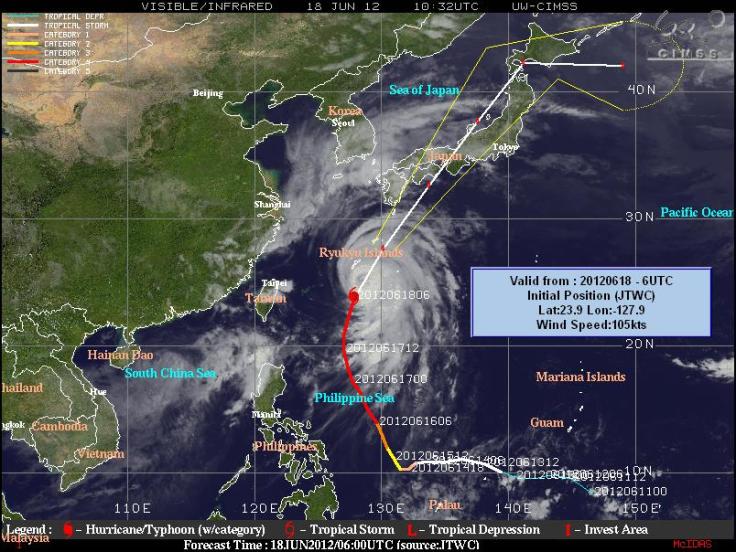
A”Super” Typhoon  with 150 MPH sustained winds heading for Fukushima the crippled nuclear power plant.   Fukushima nuclear power faces its second typhoon in October, according to the weather agency.   The crippled Fukushima nuclear plant is not fully prepared for the heavy rain and winds of a typhoon bearing down on Japan, the plant’s raising the risk of further radiation leaks if storms thrash exposed pools of uranium fuel rods or tanks holding contaminated water.

Logo of the Joint Typhoon Warning Center
Logo of the Joint Typhoon Warning Center (Photo credit: Wikipedia)


This section Copied from: www.conspiracy-cafe.com

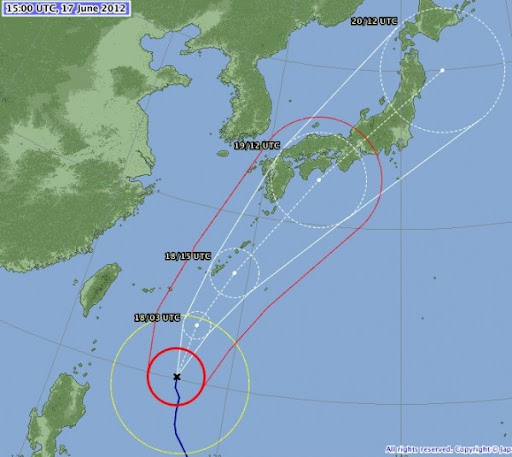
This present course will allow us to see how the storm may be altered to hit Fukushima directly. It is well within the capabilities of technology to steer storms. The NWO is looking for an extinction level event to wreak havoc upon the Earth. Guchol means spice.

Typhoon Guchol from another estimated track

To add insult to injury, this is a one two punch. There is another tropical storm forming in the South China Sea. This storm will most likely trail Guchol. If they join, what then? The storm is called Talim. In Urdu it means education or learning. In the production of rugs it refers to the description of the number of pile knots and their colours.

This section copied from : http://www.bloomberg.com

‘Naked’ Pools

“Uranium spent fuel pools of No. 3 and No. 4 reactors are currently naked,” Kazuhiko Kudo, a research professor of nuclear engineering at Kyushu University, said on June 5. “A tornado with winds of 100 meters per second like the one that hit Tsukuba could suck up the pool water,” exposing the fuel rods. He raised the concern during a meeting assessing safety measures at the crippled plant in May, he said.

As dismantling and decommissioning the reactors will take decades, Tepco should review the plant’s safety measures against not only aftershocks and tsunamis but also tornadoes and huge typhoons, even if the possibility of extreme phenomena are very low, said Kudo, one of 12 members of the advisory panel to the Nuclear and Industrial Safety Agency, or NISA.

Hydrogen explosions blew off the roofs and walls of reactor buildings at the Fukushima Dai-Ichi station after the March 11 quake and tsunami disrupted power and cooling systems. There are 1,535 spent fuel rods in the cooling pool of reactor building four. Without cooling water the rods would heat up and start releasing radioactive material into the atmosphere

This section Copied from: wikipedia.org

Typhoon is a mature Tropical Cyclone that develops in the northwestern part of the Pacific Ocean between 180° and 100°E. This region is referred to as the northwest Pacific basin.[1] For organizational purposes, the northern Pacific Ocean is divided into three regions: the eastern (North America to 140°W), central (140°W to 180°), and western (180° to 100°E). Identical phenomena in the eastern north Pacific are called hurricanes, with tropical cyclones moving into the western Pacific re-designated as typhoons. The Regional Specialized Meteorological Center (RSMC) for tropical cyclone forecasts is in Japan, with other tropical cyclone warning centers for the northwest Pacific in Honolulu (the Joint Typhoon Warning Center), the Philippines, and Hong Kong. While the RSMC names each system, the main name list itself is coordinated amongst 18 countries, including the United States, who have territories threatened by typhoons each year. The Philippines uses their own naming list for systems which approach the country.

Within the northwestern Pacific there are no official typhoon seasons as tropical cyclones form throughout the year. Like any tropical cyclone, there are six main requirements for typhoon formation and development: sufficiently warm sea surface temperatures, atmospheric instability, high humidity in the lower to middle levels of the troposphere, enough Coriolis force to develop a low pressure center, a pre-existing low level focus or disturbance, and low vertical wind shear. The majority of storms form between June and November whilst tropical cyclone formation is at a minimum between December and May. On average, the northwestern Pacific features the most numerous and intense tropical cyclones globally. Like other basins, they are steered by the subtropical ridge towards the west or northwest, with some systems recurving near and east of Japan. The Philippines receive a brunt of the landfalls, with China and Japan being impacted slightly less. Some of the deadliest typhoons in history have struck China. Southern China has the longest record of typhoon impacts for the region, with a thousand year sample via documents within their archives. Taiwan has received the wettest known typhoon on record for the northwest Pacific tropical cyclone basin.

  1. ► 7:21► 7:21

    Japan: “Super Typhoon” Headed For Japan! – YouTube

    youtube.comSep 14, 2012 – 7 min – Uploaded by paulbegley34
    Theologian Paul Begley of Indiana fears for major damage and loss of life http:// http://www.paulbegleyprophecy.com 
  2. ► 1:23► 1:23

    Nasty Typhoon Heading for Japan!! Why Media 

    youtube.comAug 28, 2011 – 1 min – Uploaded by series1riv
    I saw 194 kmh windspeed listed here… what is going on on our planet?
  3. ► 1:41► 1:41

    Raw Video: Typhoon Headed to Japan Disaster 

    youtube.comSep 20, 2011 – 2 min – Uploaded by AssociatedPress
    A powerful typhoon is bearing down on Japan’s tsunami-ravaged northeastern coast, approaching a 
  4. ► 2:17► 2:17

    ALERT: Cat 5 TYPHOON SUPER STORM headed 

    youtube.comSep 14, 2012 – 2 min – Uploaded by idahopicker
    SUBSCRIBE Super typhoon Sanba, with peak winds of 155 mph, continues on its collision course with 
  5. ► 1:41► 1:41

    Raw Video: Typhoon Headed to Japan Disaster 

    dailymotion.comSep 21, 2011 – 2 min
    A powerful typhoon is bearing down on Japan’s tsunami-ravaged northeastern coast, approaching a 
  6. ► 3:03► 3:03

    OYEP BREAKING NEWS!!! “Super Typhoon 

    youtube.comSep 15, 2012 – 3 min – Uploaded by PureGraceEvangelism
    Our prayers are with you all in Jesus name, Amen! For more breaking News matching Bible Prophecy go to: 
  7. ► 2:51► 2:51

    Super Typhoon Sanba (Karen) Headed Towards 

    youtube.comSep 14, 2012 – 3 min – Uploaded by ConservativeNewMedia
    A massive “super”-level typhoon named Sanba (Karen) isheaded towards Okinawa, Japan and then is 
  8. ► 9:08► 9:08

    Typhoon Guchol Blow Past Okinawa, Next on to 

    youtube.comJun 18, 2012 – 9 min – Uploaded by robcenter1
    This clearly an indication that the typhoon season on the westpac  Guchol is expected to skirt Okinawa and 
  9. ►►

    Raw Video: Typhoon Headed to Japan Disaster 

    wsbtv.comSep 20, 2011
    A powerful typhoon is bearing down on Japan’s tsunami-ravaged northeastern coast, approaching a 

All About Astragalus, The Cancer Fighter

Image

(NaturalNews) Astragalus is a traditional Chinese medicinal herb that has been around for over 4,000 years. Astragalus is an adaptogenic, nontoxic herb and plant extract that helps the body resist the damaging effects of stress while restoring normal physiological function. Astragalus aids adrenal function, digestion, metabolism, combats fatigue and increases stamina. Astragalus is very effective in helping people with AIDS and has even proven to have an anti-tumor effect and can increase the efficacy of chemotherapy.

A native plant of China, astragalus is officially known as astragalus membranaceus: AKA Milk Vetch Root and Huang Qi. Astragalus is a perennial plant that grows up to 4 feet tall. The root of the plant has a sweet taste and contains choline, flavonoids, amino acids-gamma aminobutyric acid, canavanine, beta-sitosterol, saponins (astragalosides) and oil. The primary actions of astragalus are adaptogenic and immunomodulating. The secondary actions are anti-inflammatory, anti-viral, cardiotonic, diuretic and hepatoprotective.

Medicinal Use

Astragalus is an herb that has actions in nearly all of the body systems. It is used to treat chronic colds, Epstein Barr Virus, HIV and candida by preventing infection recurrence. Astragalus stimulates bone marrow blood cells while enhancing deep immune strength. Studies show that the polysaccharides in astragalus increase phagocytosis (the engulfing of microorganism invaders by the immune system), increase production of immunoglobulins and macrophages and modulate the pituitary-adrenal cortical activity. Astragalus protects the kidneys and lungs from damage from autoantibody complexes, regulates sweating, decreases fatigue and increases tolerance to stress.

Astragalus protects against oxidative damage by increasing mitochondrial function without increasing the mitochondrial oxygen consumption. In the liver, astragalus is a mild choleretic and also increases repairs in chronic viral hepatitis while reducing inflammation and othersymptoms. Astragalus also lengthens telomeres for longevity(TA 65 is a very pricey extract made from Astragalus that is touted to reduce all the effects of aging and mimics pretty much all the benefits of the inexpensive herb form of astragalus). Astragalus even increases motility of human sperm.

Astragalus is considered to be a cardiac tonic.In the cardiovascular system, the saponins in astragalus inhibit lipid peroxidation in the myocardium and one study using patients with angina revealed that cardiac output increased after two weeks of treatment. Astragalus strengthens left ventricular function and reduces free radical damage in patients after a heart attack and increases super oxide dismutase activity in cardiac muscle.

Astragalus: the unsung cancer fighter

Studies at the University of Houston have shown that astragalus can improve immune function in cancer patients by increasing T-cell counts. Astragalus increases the ability of NK cells and T-cells to kill cancer cells while switching on the anti-tumor activity of Interleukin-2. Inchemotherapy treatmentsastragalus provides anti-neoplastic activity anddecreasesimmunosupression. Astragalus reduces the consequences with both chemo and radiation of fatigue,weight loss, anemia, nausea and loss of strength while increasing WBC production for leucopenia (a common side effect of immunosuppressive therapy), thereby decreasing life-threatening infections.

Even though this incredible herb is listed on the Botanical Herbs Board Exams and in theCompendium of Pharmacological Actions of Medicinal Plants and Their Constituents, naming the benefits of astragalus can bring a warning letter from both the FDA and FTC, as Dr. Andrew Weil found out when he listed the benefits of taking astragalus to prevent the swine flu. So don’t expect to see any of this information on a vitamin or herb label. Despite what modern medicine and the FDA says, healing did occur long before pharmaceuticals were invented. True health comes by good foods, minerals, herbs, fasting and cleansing. Astragalus is a good guy for natural health!

Sources:

Compendium of Pharmacological Actions of Medicinal Plants and Their Constituents, Compiled and copyrighted by Eric Yarnell, ND Actions of Medicinal Plants 2007 Eric Yarnell, ND

Zhang CZ, Wang SX, Zhang Y, Chen JP, Liang XM. “In vitro estrogenic activities of Chinese medicinal plants traditionally used for the management of menopausal symptoms.” J Ethnopharmacol 2005;98(3):295-300.

Nutrition 740 notes Spring 2006, Dr. Mona Morstein, SCNM

http://www.cancertutor.com/WarBetween/War_Cure_Rates.htmlhttp://cms.herbalgram.org/herbclip/pdfs/121581-151.pdf

About the author:
Craig Stellpflug is a Cancer Nutrition Specialist, Lifestyle Coach and Neuro Development Consultant at Healing Pathways Medical Clinic, Scottsdale, AZ. With 17 years of clinical experience working with both brain disorders and cancer, Craig has seen first-hand the devastating effects of vaccines and pharmaceuticals on the human body and has come to the conclusion that a natural lifestyle and natural remedies are the true answers to health and vibrant living. You can find his daily health blog atwww.blog.realhealthtalk.comand his articles and radio show archives atwww.realhealthtalk.com

Learn more:http://www.naturalnews.com/035924_astragalus_cancer_prevention.html#ixzz1vathSZRH

Absolutely know the the Truth about the Shroud of Turin

By:Daniel J Leach

Many claim that The Shroud of Turin is Jesus Christ but the  Knights Templar claim that this is Jacques de Molay.  I myself would like to think that this is Jesus Christ but with my research and understanding of history tend to lead me to believe that this is indeed Jacques de Molay and not Jesus Christ.

Geoffroi de Charny (the French Knight who died at the 1356 battle of Poitiers) and his wife Jeanne de Vergy are the first reliably recorded owners of the Turin Shroud. This Geoffroi participated in a failed crusade under Humbert II of Viennois in the late 1340s.[26] He is sometimes confused with Templar Geoffroi de Charney.[27]

This Section Copied from: http://blog.templarhistory.com/2010/03/the-templars-and-the-shroud-of-turin/

Any discussion of the Shroud of Turin is bound to be controversial. Those who view this sacred and holy relic fall into two camps, those that believe it to be the undisputed earthly evidence of a Christ risen and those who believe it to be a medieval forgery.

It is not the intention of this web site to cast doubt on or support the authenticity of the shroud, but rather to show its possible relationship to the Knights Templar. We receive many letters from angry people who wish to enter into lengthy debates about carbon 14 reliability. We are aware of new evidence that puts the reliability of carbon 14 dating in question, so please refrain from telling us of the findings or directing us to URLs that make the claims.

There are two theories that relate to the Templars having been involved with the Shroud, one, which would support the authenticity of the Shroud and another, which would refute it.

In 1204 the Crusaders sacked the city of Constantinople. Among them were the Knights Templar, whom some scholars contend took the Burial shroud of Jesus from the city. To support this theory, author Ian Wilson who wrote the book “The Shroud of Turin: Burial Cloth Of Jesus?” makes the claim that the head that the Templars were accused of worshipping was none other than that of Jesus. His belief is that the Shroud when folded depicted the head of Christ and was referred to as the “Mandylion.” There is a painted panel at Templecombe in England that shows a bearded head like that, which is depicted on the Mandylion.

In their two books, “The Hiram Key” and “The Second Messiah,” authors Christopher Knight and Robert Lomas paint a contrasting picture to the Mandylion theory. The authors theorize that the image on the Shroud of Turin is in fact that of the last Grand Master of the order, Jacques de Molay, who was tortured some months before his execution in 1307. The image on the shroud certainly does fit the description of de Molay as depicted in medieval wood cuts, a long nose, hair shoulder length and parted in the center, a full beard that forked at its base, not to mention the six-foot frame. De Molay was said to be quite tall.

However, many have criticized the theory on the basis that the Templar rule of order forbade the Templars from growing their hair long. What critics of the theory overlook is that during DeMolay’s seven years in prison it is highly unlikely that he would have been afforded such luxuries as good grooming.

Knight and Lomas claim that the shroud figured in the Templars rituals of figurative resurrection and that DeMolay’s tortured body was wrapped in a shroud, which the Templars kept after his death. Lomas and Knight further believe that lactic acid and blood from DeMolay’s tortured body mixed with frankincense (used to whiten the cloth) etching his image into the shroud.

When the shroud was first put on display in 1357 (50 years after the disbanding of the order) by the family of Geoffrey de Charney who was also burned at the stake with de Molay, the first people viewing the shroud recognized the image to be that of Christ.

The authors theorize that Jacques de Molay may have been tortured in a manner similar to Christ as a mockery. Certainly then, the wounds suffered by de Molay where the same as those of Jesus Christ on the Cross.

Today it is commonly believed by many, through carbon dating, that the shroud dates to the late 13th century and not to the date of Christ’s supposed crucifixion. It is interesting that the church revealed these carbon dating results on October 13th, 1989, which is the same day the Templars were arrested by Church and State. According to the authors:

“Carbon dating has conclusively shown that the Shroud of Turin dates from between 1260 and 1380, precisely as we would expect if it were the image of Jacques de Molay. There is no other known theory that fits the scientifically established facts. Through experimentation, we know that the figure on the Shroud was on a soft bed of some kind, which strongly suggests that the victim was not dead and was expected to recover.”

The Second Messiah pg. 161 – Christopher Knight and Robert Lomas

Regardless of whether the findings of Ian Wilson or Knight and Lomas are correct, it is evident that this most holy and venerated relic has found its way into the Templar mythos.

Lynn Picknet and Clive Prince, authors of “Turin Shroud: In Whose Image?” present another theory of interest on the matter. Readers will recognize the authors from the book, “The Templar Revelation.” In the authors’ earlier book the duo claim that Leonardo Da Vinci who created an early photographic technique manufactured the image on the shroud of Turin.

Stephanie Pappas
Live Science
Thu, 05 Apr 2012 17:01 CDT
Print

Shroud of Turin

© Public domain
Full-length negative photograph of the Shroud of Turin.

A hoax or a miracle? The Shroud of Turin has inspired this question for centuries. Now, an art historian says this piece of cloth, said to bear the imprint of the crucified body of Jesus Christ, may be something in between.

According to Thomas de Wesselow, formerly of Cambridge University, the controversial shroud is no medieval forgery, as a 1989 attempt at radiocarbon dating suggests. Nor is the strange outline of the body on the fabric a miracle, de Wesselow writes in his new book, The Sign: The Shroud of Turin and the Secret of the Resurrection (Dutton Adult, 2012). Instead, de Wesselow suggests, the shroud was created by natural chemical processes – and then interpreted by Jesus’ followers as a sign of his resurrection.

“People in the past did not view images as just the mundane things that we see them as today. They were potentially alive. They were seen as sources of power,” de Wesselow told LiveScience. The image of Jesus found on the shroud would have been seen as a “living double,” he said. “It seemed like they had a living double after his death and therefore it was seen as Jesus resurrected.”

Believing the shroud

As de Wesselow is quick to admit, this idea is only a hypothesis. No one has tested whether a decomposing body could leave an imprint on shroud-style cloth like the one seen on the shroud. A 2003 paper published in the journal Melanoidins in Food and Health, however, posited that chemicals from the body could react with carbohydrates on the cloth, resulting in a browning reaction similar to the one seen on baked bread. (De Wesselow said he knows of no plans to conduct an experiment to discover if this idea really works.)

Perhaps more problematic is the authenticity of the shroud itself. Radiocarbon dating conducted in 1988 estimated the shroud to medieval times, between approximately A.D. 1260 and 1390. This is also the same time period when records of the shroud begin to appear, suggesting a forgery.

Critics have charged that the researchers who dated the shroud accidentally chose asample of fabric added to the shroud during repairs in the medieval era, skewing the results. That controversy still rages, but de Wesselow is convinced of the shroud’s authenticity from an art history approach.

“It’s nothing like any other medieval work of art,” de Wesselow said. “There’s just nothing like it.”

Among the anachronisms, de Wesselow said, is the realistic nature of the body outline. No one was painting that realistically in the 14th century, he said. Similarly, the body image is in negative (light areas are dark and vice versa), a style not seen until the advent of photography centuries later, he said.

“From an art historian’s point of view, it’s completely inexplicable as a work of art of this period,” de Wesselow said.

Resurrection: spiritual or physical?

If de Wesselow’s belief in the shroud’s legitimacy is likely to rub skeptics the wrong way, his mundane explanation of how the image of Jesus came to be is likely to ruffle religious feathers. According to de Wesselow, there’s no need to invoke a miracle when simple chemistry could explain the imprint. It’s likely, he says, that Jesus’ female followers returned to his tomb to finish anointing his body for burial three days after his death. When they lifted the shroud to complete their work, they would have seen the outline of the body and interpreted it as a sign of Jesus’ spiritual revival.

From there, de Wesselow suspects, the shroud went on tour around the Holy Land, providing physical proof of the resurrection to Jesus’ followers. When the Bible talks about people meeting Jesus post-resurrection, de Wesselow said, what it really means is that they saw the shroud. He cites the early writings of Saint Paul, which focus on a spiritual resurrection, over the gospels of Mark, Matthew, Luke and John, which were written later and invoke physical resurrection.

“The original conception of the resurrection was that Jesus was resurrected in a spiritual body, not in his physical body,” de Wesselow said.

These ideas are already receiving pushback, though de Wesselow says he’s yet to get responses from people who have read his entire book. Noted skeptic Joe Nickell toldMSNBC’s Alan Boyle that de Wesselow’s ideas were “breathtakingly astonishing,” and not in a good way; Nickell has argued on multiple occasions that the shroud’s spotty historical record and too-perfect image strongly suggest a counterfeit.

On the other end of the religious spectrum, former high-school teacher and Catholic religious speaker David Roemer believes in Jesus’ resurrection, but not the shroud’s authenticity. The image is too clear and the markings said to be blood aren’t smeared as they would be if the cloth had covered a corpse, Roemer told LiveScience.

“When you get an image this detailed, it means it was done by some kind of a human being,” Roemer said.

Unlike many “shroudies,” as believers are deprecatingly called, Roemer suspects the shroud was deliberately created by Gnostic sects in the first or second century. A common religious explanation for the markings is that a flash of energy or radiation accompanied Christ’s resurrection, “burning” his image onto the cloth.

If anything is certain about de Wesselow’s hypothesis, it’s that it is not likely to settle the shroud controversy. Scientific examinations of the delicate cloth are few and far between – and so are disinterested parties. Roemer, for example, recently arrived at a scheduled talk at a Catholic church in New York only to find the talk had been canceled when the priest learned of Roemer’s shroud skepticism. (The Catholic Church has no official position on the shroud’s authenticity.)

Meanwhile, de Wesselow said, people who aren’t driven by faith to accept the cloth as real generally don’t care about the shroud at all.

“The intellectual establishment, if you like, is not interested in shroud science,” he said. “It regards it as fringe and it’s not interested.”

Create a website or blog at WordPress.com

Up ↑