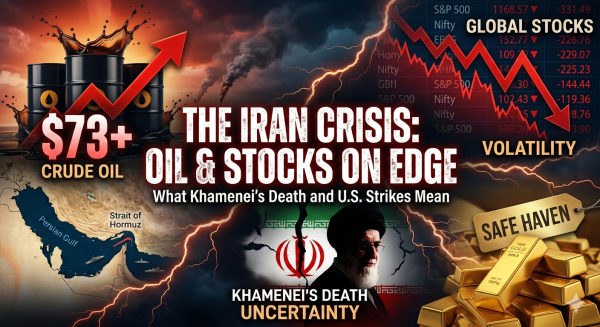
The situation regarding the U.S.-Israeli military operation in Iran and the confirmed death of Supreme Leader Ayatollah Ali Khamenei on February 28, 2026, represents a major geopolitical escalation. Markets typically react to such events with extreme caution, driven by uncertainty and the potential for long-term regional instability.
While I cannot offer financial advice, I can provide an analysis of how such events generally affect global markets.
1. Oil Market Implications
The primary concern for the energy market in a conflict of this scale is supply disruption.
- Risk Premium: When conflict flares in the Middle East, oil prices often experience a “risk premium”—a price increase based on the fear that supply will be restricted. Even if physical supply is not immediately halted, traders bid up prices in anticipation of potential blockades.
- The Strait of Hormuz: A critical concern for energy markets is the security of the Strait of Hormuz, a vital chokepoint through which a significant portion of the world’s daily oil production passes. If the conflict threatens this passage, the impact on global oil prices could be substantial and immediate.
- Supply Concerns: With reports of strikes on Iranian infrastructure, markets will be closely watching for any damage to production or export facilities. Any sustained military engagement that affects Iran’s ability to export oil—or triggers retaliatory actions against regional infrastructure—would likely keep upward pressure on prices.
2. Stock Market Implications
Equity markets generally react negatively to geopolitical uncertainty. The typical behaviors include:
- Heightened Volatility: Investors often move to reduce risk, leading to broader market sell-offs or high volatility (as measured by indexes like the VIX).
- Flight to Safety: Capital often migrates toward “safe-haven” assets. Historically, this means increased demand for:
- Government Bonds (e.g., U.S. Treasuries).
- Gold and other precious metals.
- The U.S. Dollar (USD), which is often viewed as a reserve currency in times of crisis.
- Sector Divergence:
- Energy Stocks: While oil prices rise, energy companies may see gains, though this is often balanced against the potential for general market downturns.
- Defensive Sectors: Investors often rotate into sectors considered more resilient, such as utilities, consumer staples, or defense (due to increased military spending).
- Travel and Discretionary: Industries like aviation, tourism, and consumer discretionary spending often face pressure due to rising fuel costs (which lower profit margins) and the general dampening of consumer sentiment during wartime.
3. The Factor of Uncertainty
The most significant variable right now is the duration and scope of the conflict.
The current reports indicate that the objective is “regime change” and the neutralizing of military capabilities. Markets despise ambiguity; until the path of this conflict—and the potential for a wider regional war—becomes clearer, analysts expect the markets to remain highly reactive to every new headline. Iran #OilPrices #StockMarket #Geopolitics #Khamenei

 Anti Deep State Party