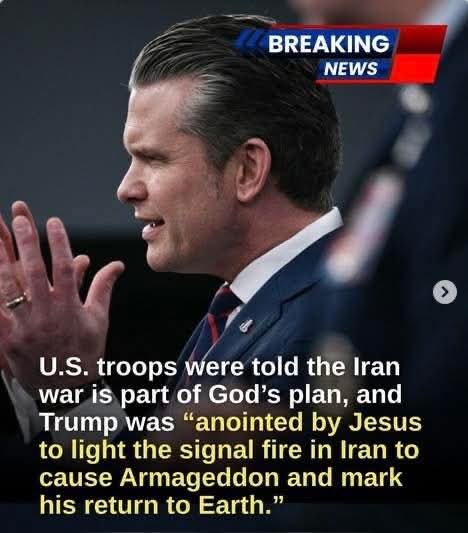
As the smoke clears from the initial strikes of Operation Epic Fury, a different kind of firestorm is brewing within the Pentagon. It’s not about logistics or air superiority—it’s about the soul of the United States military and a sudden, sharp spike in religious nationalism within the chain of command.
Over the last 72 hours, the Military Religious Freedom Foundation (MRFF) has reported an unprecedented surge in complaints. Over 200 service members have come forward, alleging that their commanders are framing the current conflict with Iran not as a matter of national security, but as a divine mandate.
“Anointed for Armageddon”
The most jarring report comes from a combat-unit briefing held this past Monday. According to a formal complaint filed by a non-commissioned officer (NCO), a commander told his troops that the war in Iran is a central piece of “God’s plan.”
The rhetoric reportedly went further, claiming that:
- President Trump was “anointed by Jesus” to lead this charge.
- The strikes are the “signal fire” intended to trigger Armageddon.
- The conflict is a necessary precursor to the Second Coming.
This isn’t an isolated incident. The MRFF indicates that since Saturday morning, similar reports have flooded in from every branch of the military, suggesting a coordinated or at least widespread shift in how some officers are justifying the mission to their subordinates.
The Legal and Ethical Battlefield
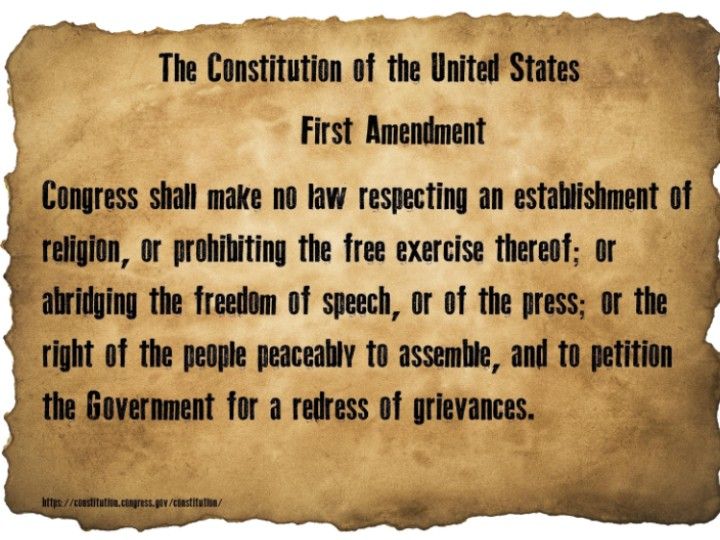
The U.S. military is governed by the Establishment Clause of the First Amendment, which prohibits the government (and by extension, military officers) from establishing or favoring a specific religion. When a commander uses their rank to promote apocalyptic theology, it creates a massive rift in unit cohesion.
Why this matters now: - Unit Cohesion: Troops include Christians, Muslims, Jews, atheists, and practitioners of many other faiths. Forcing an “End Times” narrative on a diverse unit can alienate personnel and degrade trust.
- Global Perception: Framing a strategic campaign as a “Holy War” or “Crusade” provides immense propaganda value to adversaries, potentially escalating the conflict beyond its original scope.
- Command Influence: Subordinates often feel they cannot challenge these statements without risking their careers, leading to “toxic leadership” environments.
A Divided Front
While the White House and Defense Secretary Pete Hegseth maintain that the objective of Operation Epic Fury is the neutralization of nuclear threats, the “on-the-ground” messaging from some commanders tells a different story. Organizations like the Council on American-Islamic Relations (CAIR) and several mainline Christian denominations have already issued statements of “grave concern,” calling for an immediate investigation into these briefings.
As the war enters its next phase, the Pentagon faces a two-front battle: one against a foreign adversary, and another against the erosion of the secular principles that define the American military.
What do you think about the intersection of faith and the chain of command? Should commanders be allowed to share their personal convictions if they believe it motivates their troops, or is this a bridge too far?
If you want to stay updated on the legal fallout, I can look into the specific Uniform Code of Military Justice (UCMJ) articles that these commanders may be violating. Would you like me to do that?





 Anti Deep State Party